Home energy efficiency is largely determined by how well a house manages heating, cooling, hot water, and air leakage through its building envelope.
Many homes feel expensive to run not because of one broken system, but because several systems quietly waste energy at the same time. Heating runs longer than needed, cooling leaks out through gaps, and hot water systems often work harder than necessary.
Once you start viewing a home as a connected system rather than separate appliances, the biggest sources of energy waste become much easier to see—and fix.
Takeaways
- Heating, cooling, and hot water systems are the largest drivers of home energy use in most buildings.
- Air leakage and insulation quality often matter more than the equipment itself.
- Small inefficiencies across multiple systems add up to major energy loss over time.
What Drives Energy Use in Home Heating and Cooling
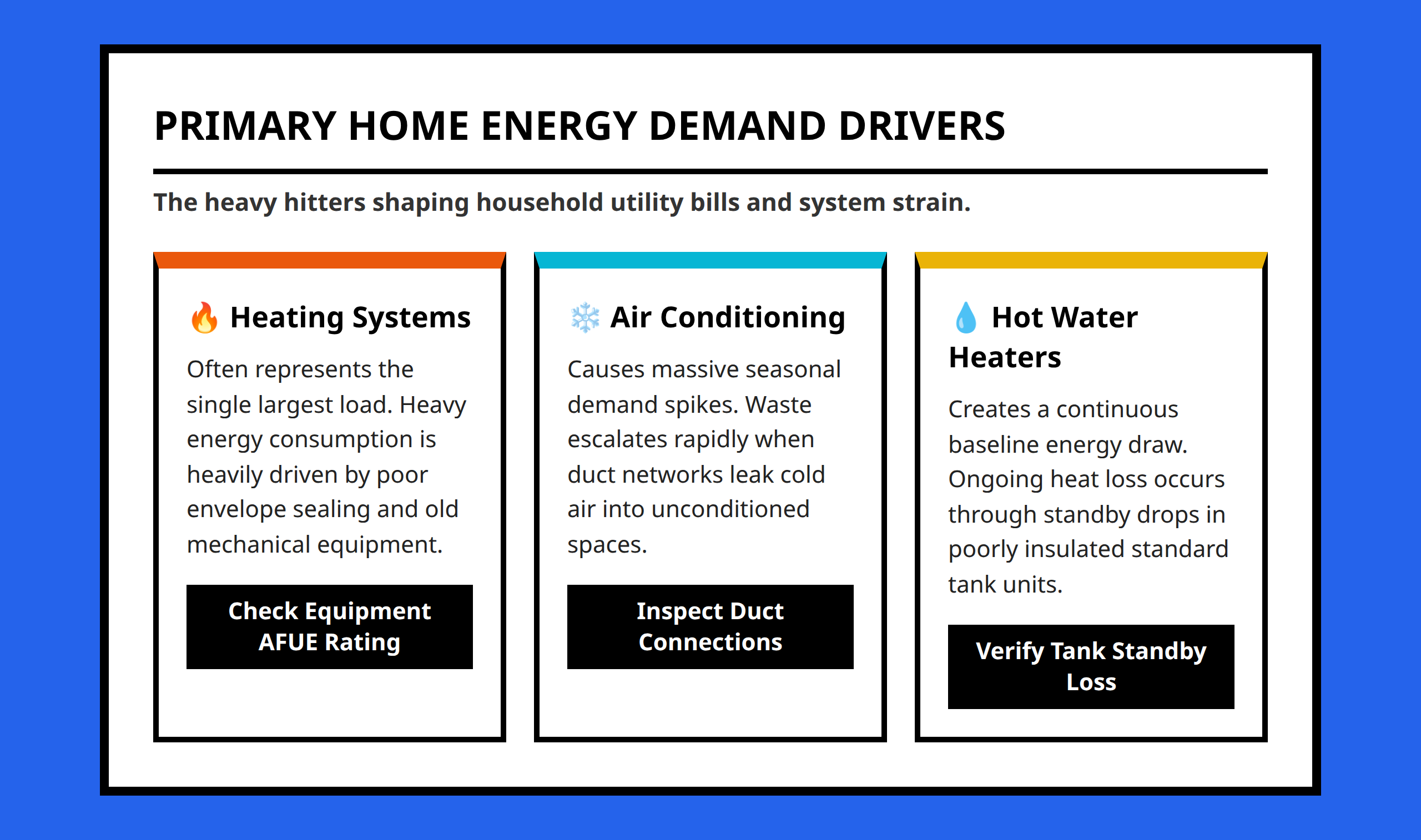
Heating and cooling are usually the largest energy demands in a home because they constantly fight against outdoor temperatures. The colder or hotter the climate, the harder these systems must work to maintain indoor comfort.
At the core, a heating system has three parts: the heating unit that creates warmth, the distribution system that moves it, and the controls that regulate it. Each part affects overall efficiency, and weakness in one area can reduce performance in the others.
For example, a furnace may produce heat efficiently, but if ductwork leaks or is poorly insulated, much of that heat never reaches the living space. Instead, it escapes into unconditioned areas like attics or crawl spaces.
Air conditioning systems face similar issues. Even efficient equipment can waste energy if cooled air escapes through poorly sealed ducts or if warm outside air enters through gaps in the building envelope.
There is also a difference between how systems distribute heat. Forced-air systems move warm air through ducts, which can also support cooling and ventilation. However, this same air movement can lose efficiency if ducts are not sealed or insulated properly, or if airflow is restricted by poor design.
The Role of Hot Water Systems in Household Energy Consumption
Hot water systems are often overlooked, but they run consistently throughout the year and contribute a steady share of energy use in most homes.
Water heaters must continuously maintain temperature, which means they are always working in the background—even when no hot water is actively being used. This makes efficiency and insulation especially important.
Different systems vary in performance. Older or poorly maintained units often lose efficiency over time, requiring more energy to produce the same amount of hot water. Newer systems or properly maintained equipment reduce this waste by improving heat transfer and limiting standby losses.
One of the most important factors is how well the hot water system is insulated and maintained. If heat escapes from storage tanks or pipes, the system must reheat water more frequently, increasing overall energy consumption.
Even small leaks or inefficiencies in plumbing can create continuous energy loss because water heating is not a one-time event—it is an ongoing cycle of heating and reheating throughout the day.
Building Envelope: Insulation and Air Leakage
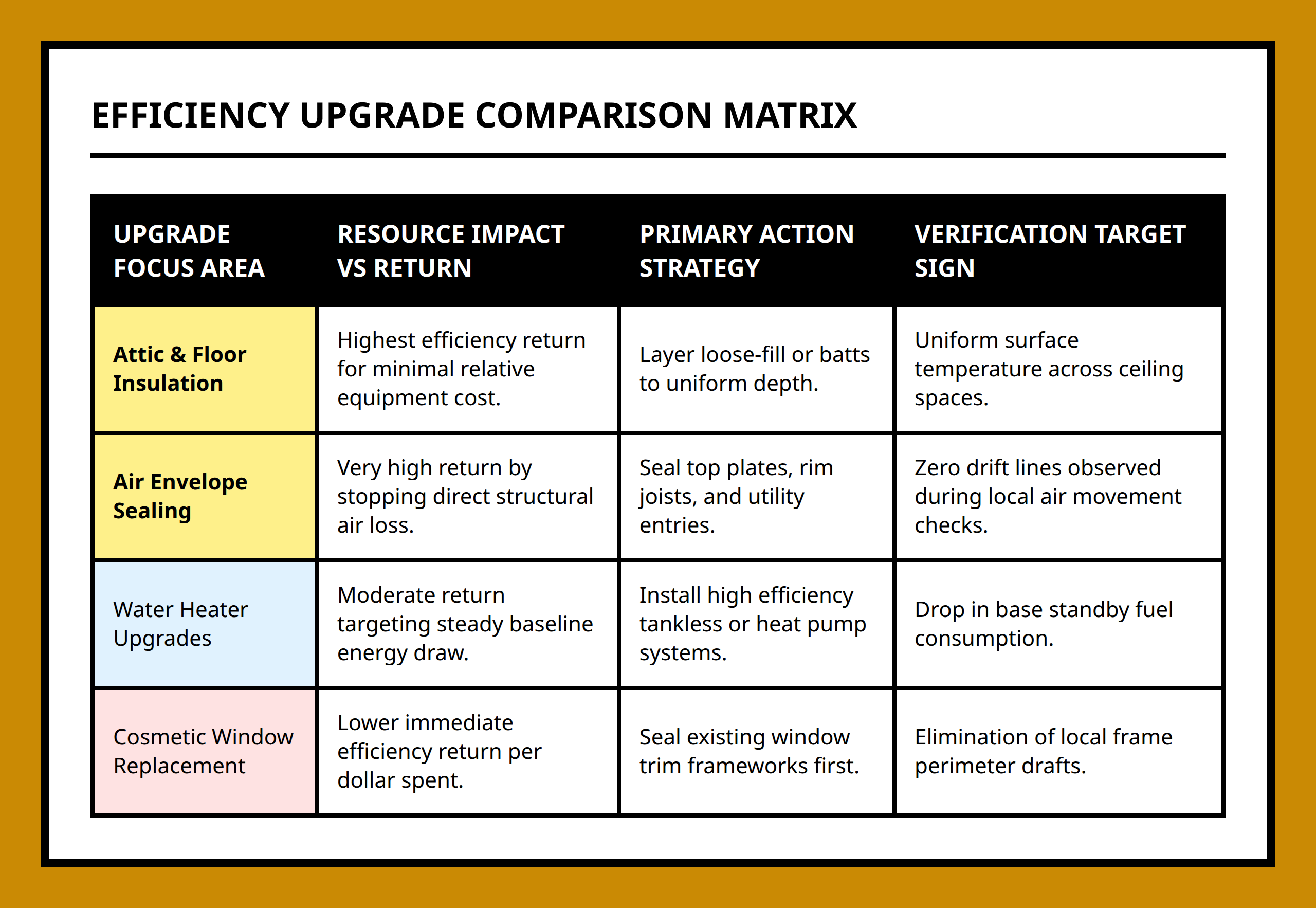
The building envelope is the barrier between indoor comfort and outdoor conditions. It includes walls, roof, floors, windows, doors, insulation, and all air sealing points. This is where a large portion of energy loss occurs.
Insulation slows the movement of heat, helping maintain indoor temperatures with less energy use. Without sufficient insulation, heat escapes in winter and enters in summer, forcing heating and cooling systems to work harder.
Air leakage is another major factor. Even small gaps around windows, doors, ducts, and wall joints allow conditioned air to escape while letting outdoor air in. This uncontrolled exchange increases heating and cooling demand significantly.
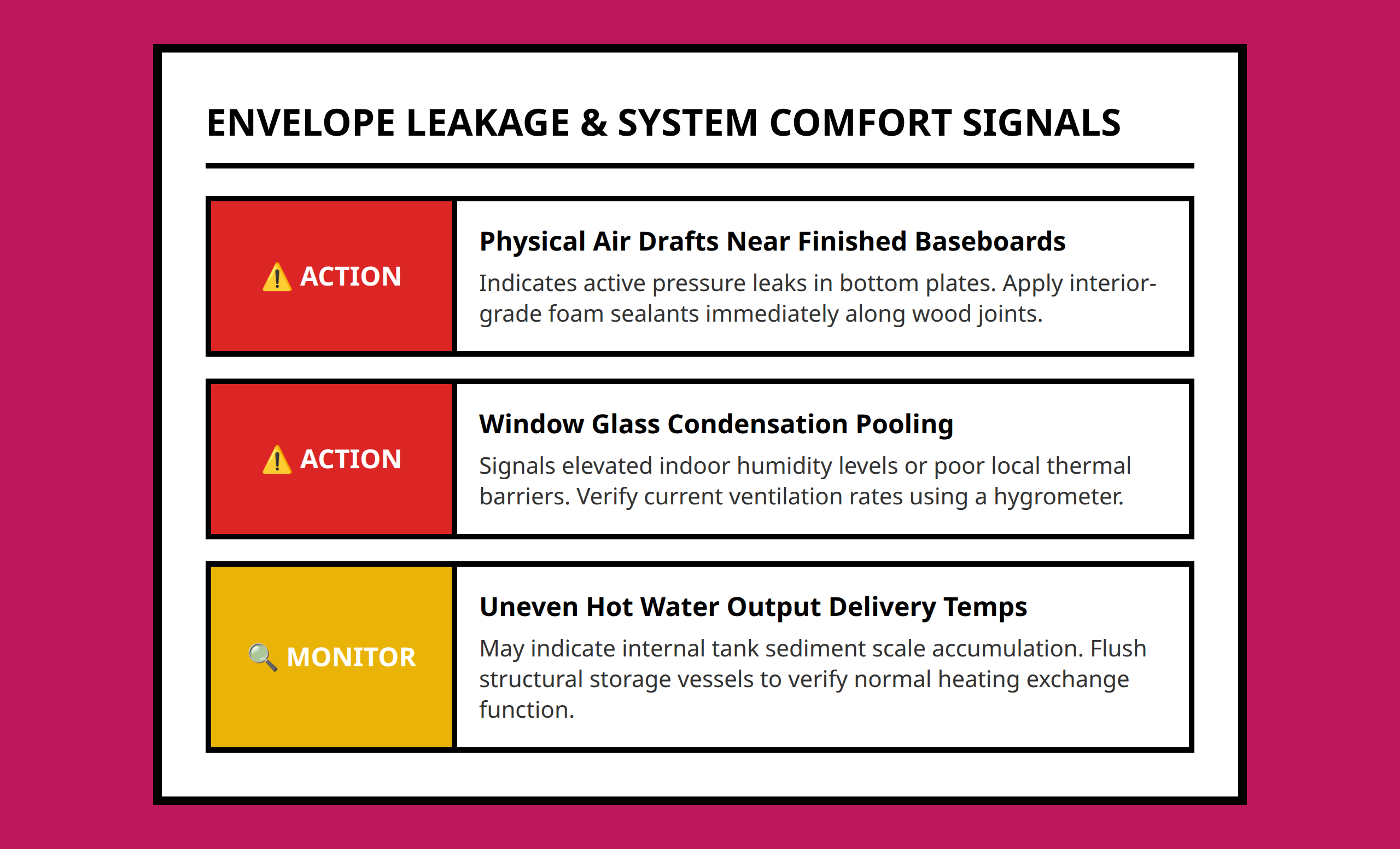
A home with poor sealing can feel drafty even when the heating system is working correctly. That is because energy is not staying inside long enough to stabilize indoor conditions.
Humidity also plays a role in comfort and efficiency. Air that is too dry or too humid can make a space feel uncomfortable, even at the right temperature, leading people to adjust thermostats unnecessarily and increase energy use.
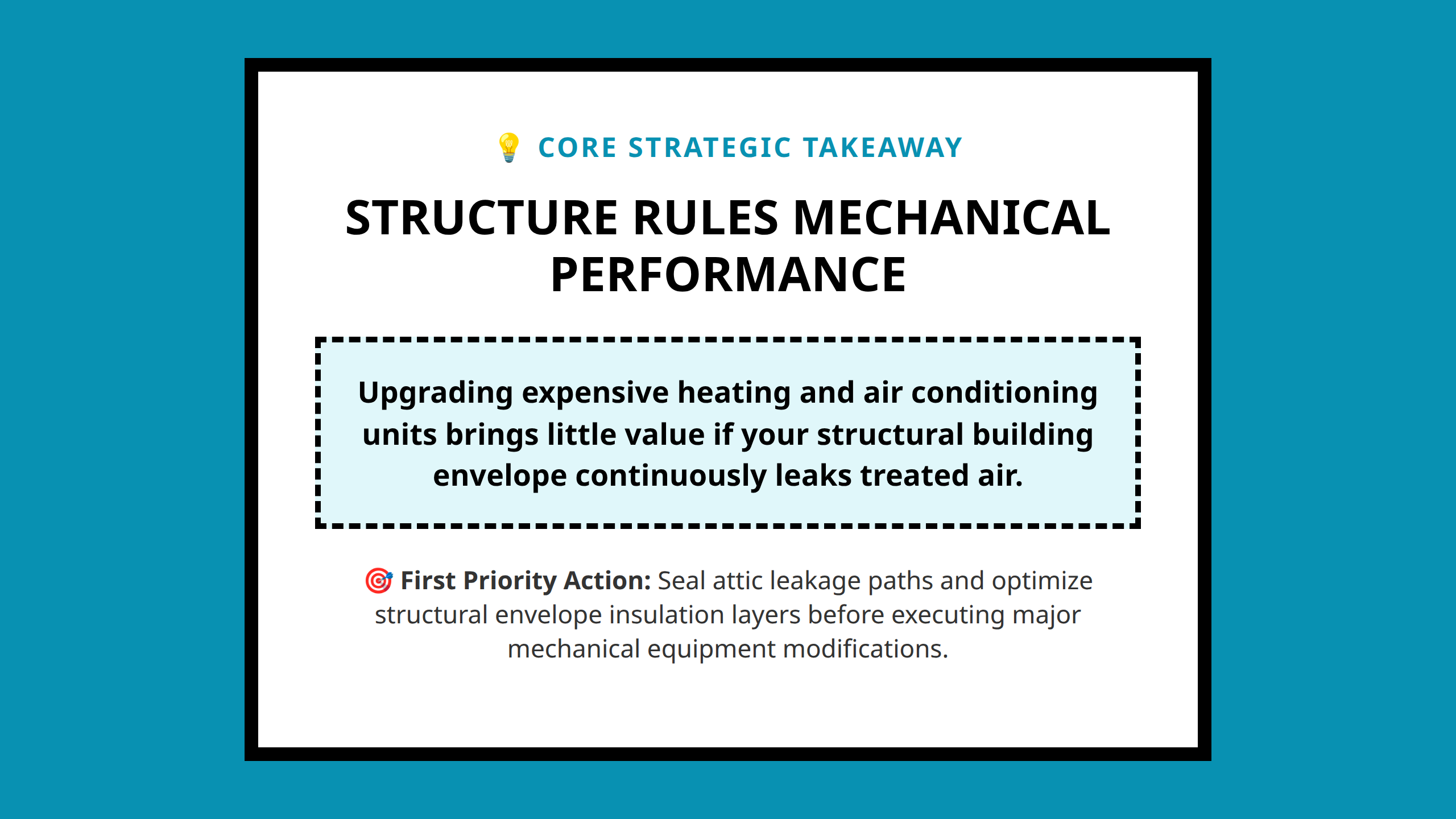
In practice, improving insulation and sealing leaks often has a greater impact on energy savings than upgrading equipment alone. A well-sealed home reduces the workload on every system inside it.
Practical Steps to Improve Home Energy Performance
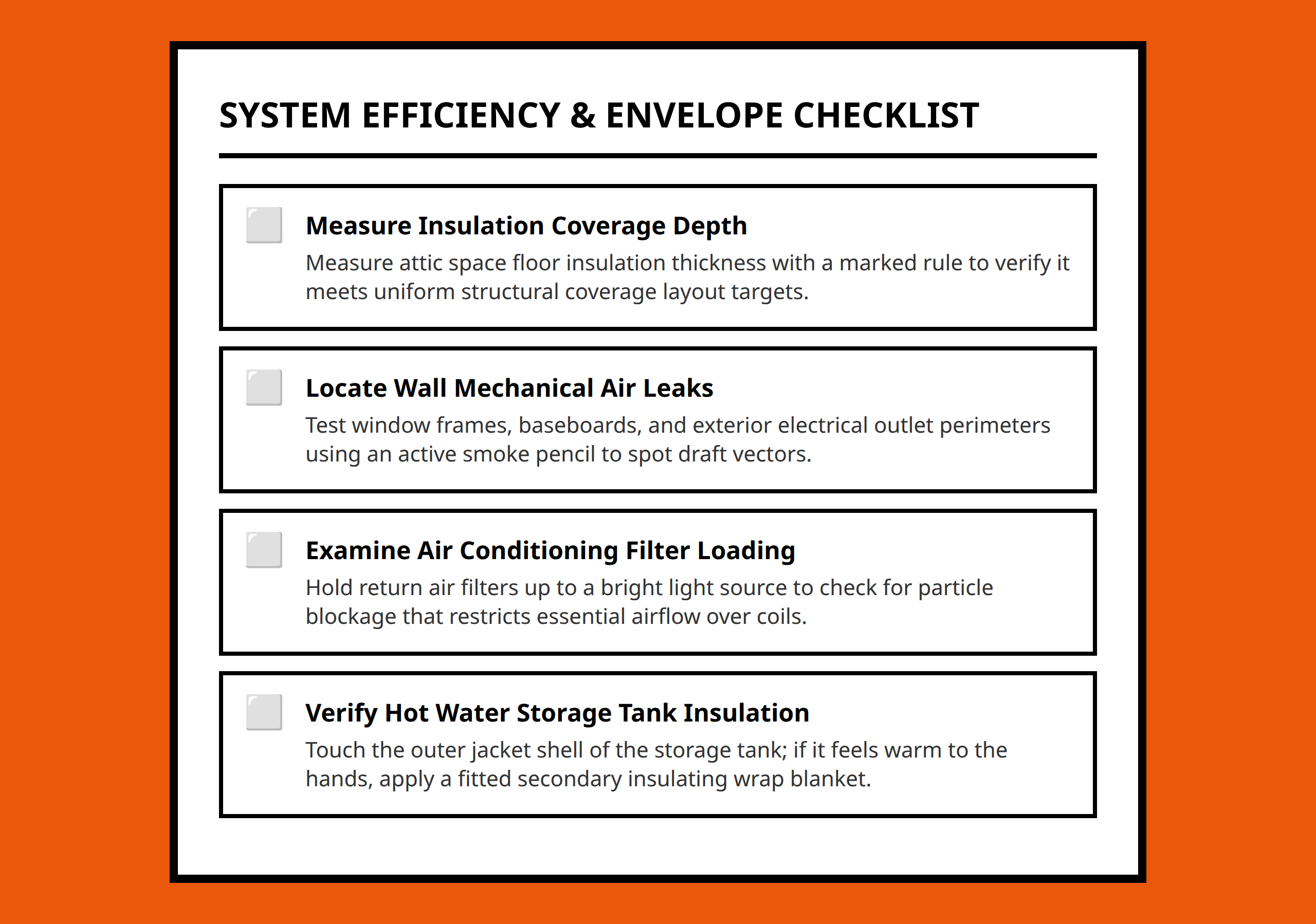
Improving home energy efficiency is most effective when approached step by step, starting with the biggest sources of loss before moving to smaller upgrades.
The first step is improving insulation in key areas like attics, walls, and basements. These areas often represent the largest pathways for heat loss or gain. Better insulation reduces the need for constant heating and cooling adjustments.
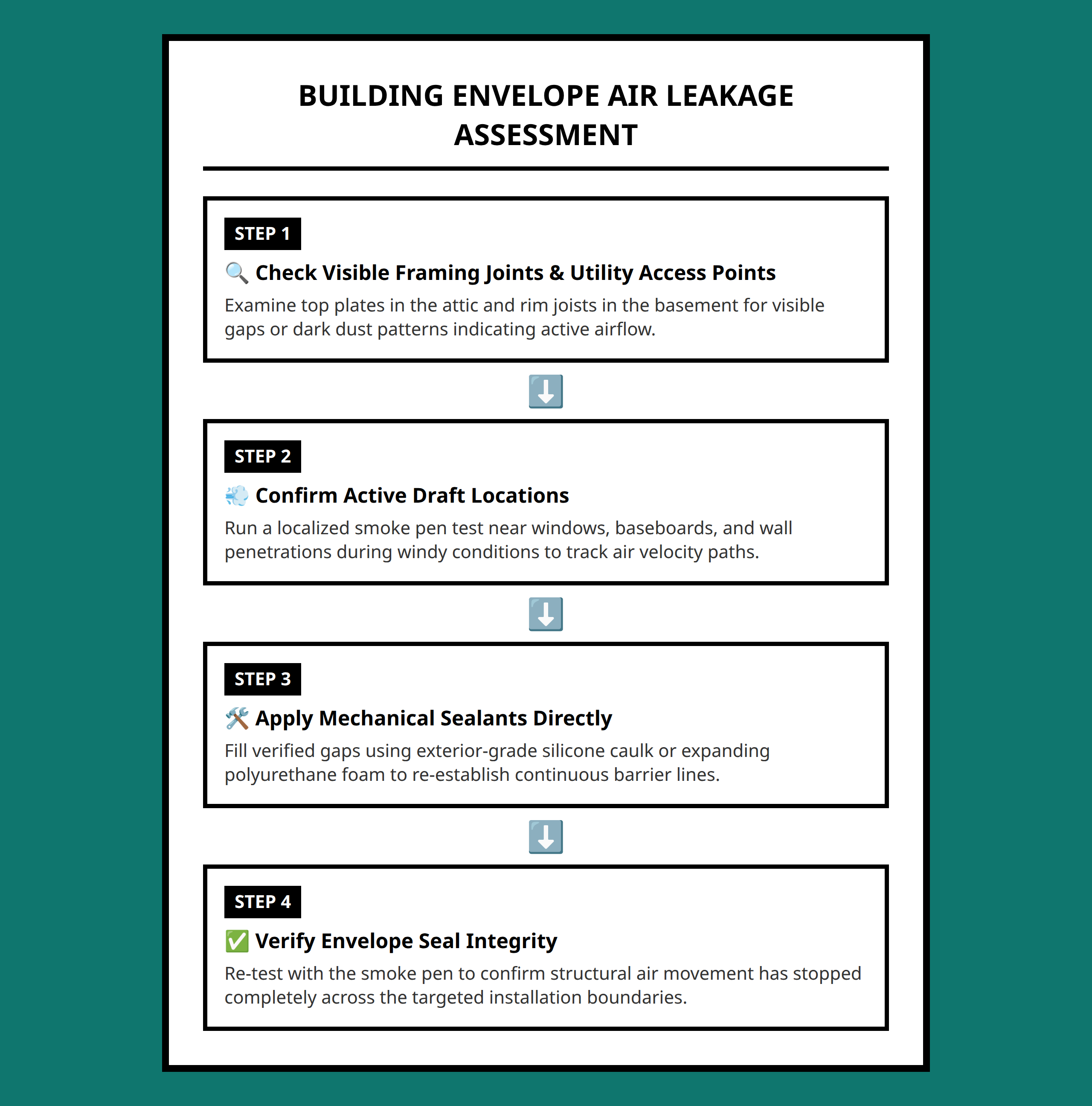
Next, sealing air leaks around windows, doors, and ductwork helps prevent uncontrolled air exchange. Even small gaps can create noticeable energy loss when combined across an entire home.
For heating and cooling systems, maintenance and proper operation are essential. Clean filters, properly functioning controls, and well-maintained equipment improve efficiency without requiring full replacement.
Upgrading older systems can also make a difference, but only after insulation and sealing issues are addressed. Otherwise, new equipment may still work harder than necessary due to structural energy loss.
Hot water systems should also be checked for efficiency. Reducing standby losses, insulating pipes, and ensuring proper temperature settings can lower overall energy use without changing daily routines.
A useful way to think about improvements is this: reducing energy loss is usually more effective than increasing energy supply efficiency alone. A home that holds onto heat and cooled air naturally requires less energy from every system.
FAQ
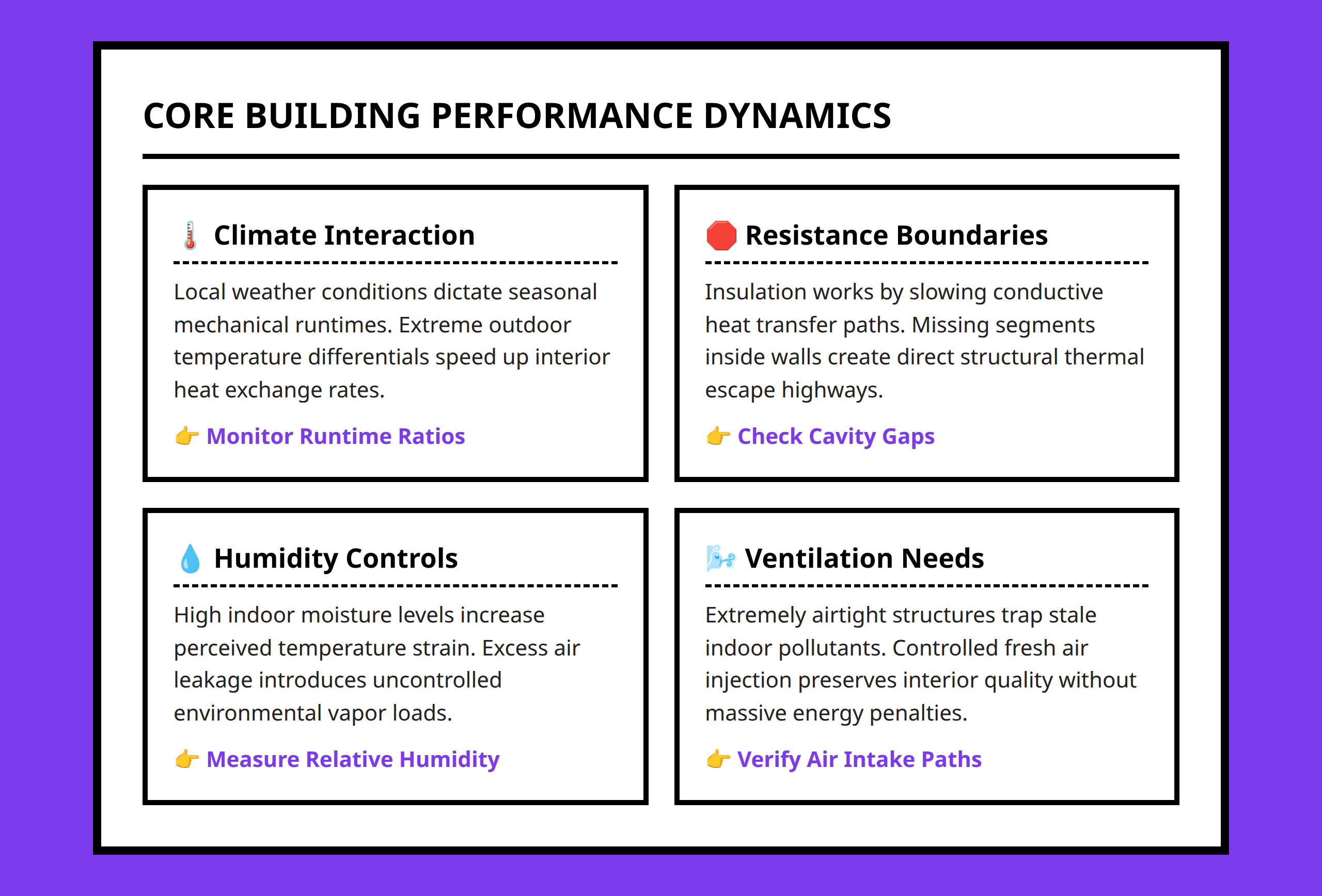
- Building envelope: The physical barrier between indoor and outdoor environments, including walls, roof, floors, windows, and doors.
- Air leakage: Uncontrolled movement of air through gaps and cracks in a building.
- Insulation: Material used to slow the transfer of heat in or out of a building.
- Heating system efficiency: How effectively a heating system converts energy into usable heat for the home.
- Humidity control: Managing moisture levels in indoor air to maintain comfort and prevent damage.
Home energy efficiency ultimately comes down to one question: how well does your home hold onto the energy you already pay for? Once you see heating, cooling, and hot water as parts of one system shaped by insulation and air sealing, the biggest opportunities for savings become much clearer.
A practical next step is to walk through your home and identify obvious air leaks around doors, windows, and duct openings—because fixing those first often changes how every other system performs.
References:
- https://www.energy.gov/energysaver/why-energy-efficiency-matters
- https://www.nyserda.ny.gov/All-Programs/Higher-Education-Playbook/Decarbonization-Strategies/Load-Reduction/HVAC-and-DHW-Efficiency-Strategies
- https://www.socomec.us/en-us/news/top-5-ways-increase-energy-efficiency-your-building
- https://www.aceee.org/topic/energy-efficiency-strategies-and-upgrades
- https://cm3inc.com/two-paths-to-stop-wasting-energy-in-your-building/
- https://www.epa.gov/p2/pollution-prevention-tips-energy-efficiency
- https://www.stopwaste.org/buildings-construction/saving-energy
- https://www.wattsense.com/blog/building-management/reduce-energy-building/
- https://www.energystar.gov/about/how-energy-star-protects-environment/energy-efficiency
