Electricity use in homes is determined by how many watts appliances consume and how long they run, measured in kilowatt-hours.
Most people only see electricity as a monthly bill. The number at the bottom feels abstract, almost disconnected from real life. It’s easy to assume it reflects something unpredictable or outside your control.
But once electricity is broken down into how individual devices use power over time, the picture becomes much clearer. Your home is not a single system—it is a collection of appliances, each drawing energy in different ways and at different intensities.
Takeaways
- Electricity use becomes understandable when you separate power (watts) from energy (kilowatt-hours).
- Small devices used for long periods can consume more energy than large devices used briefly.
- Most household electricity use comes from a small number of major appliances.
Understanding Electrical Power and Energy Consumption
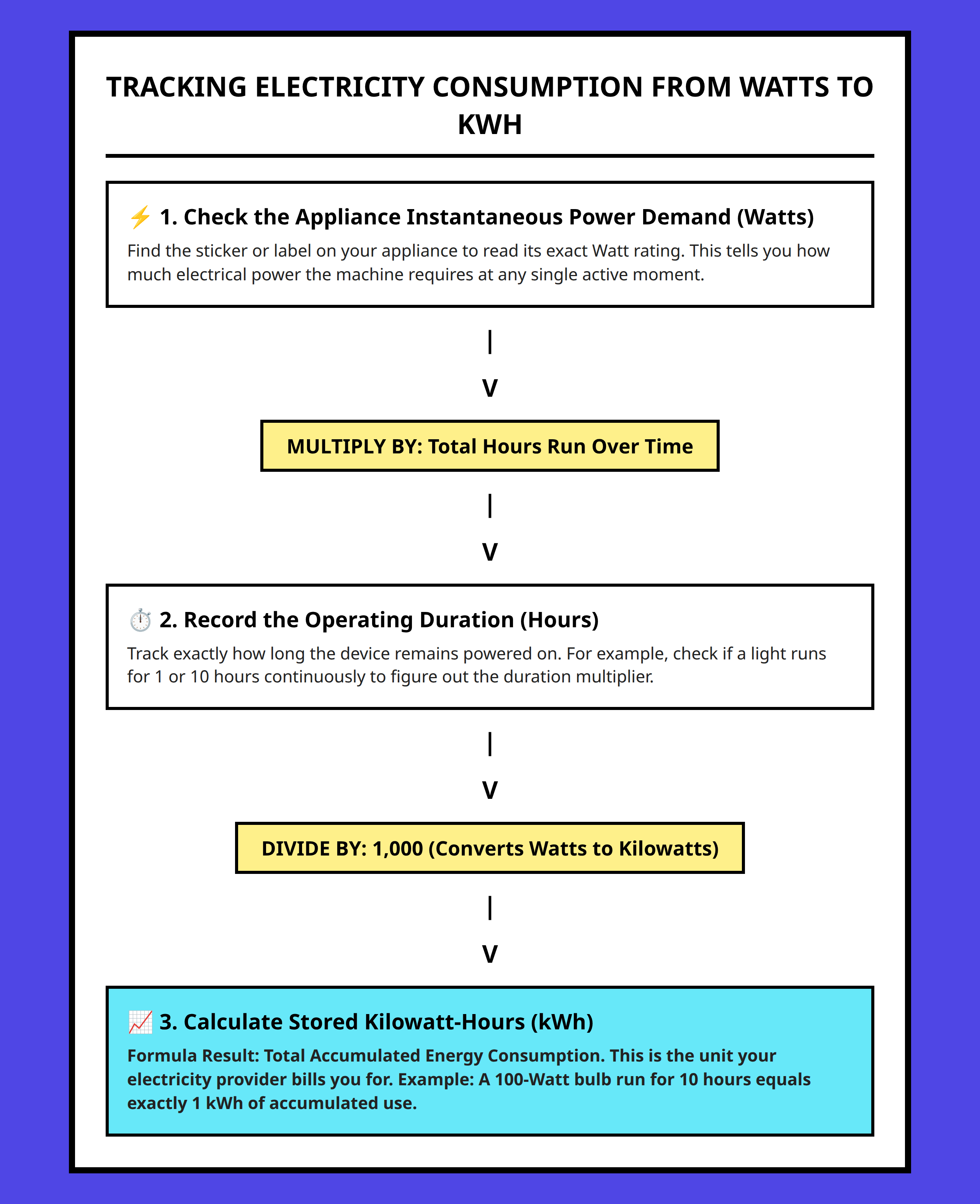
To understand household electricity use, you first need to separate two ideas that are often confused: power and energy.
Power is measured in watts. It describes how much electricity a device uses at a specific moment. A higher watt number means the device demands more electricity while it is running.
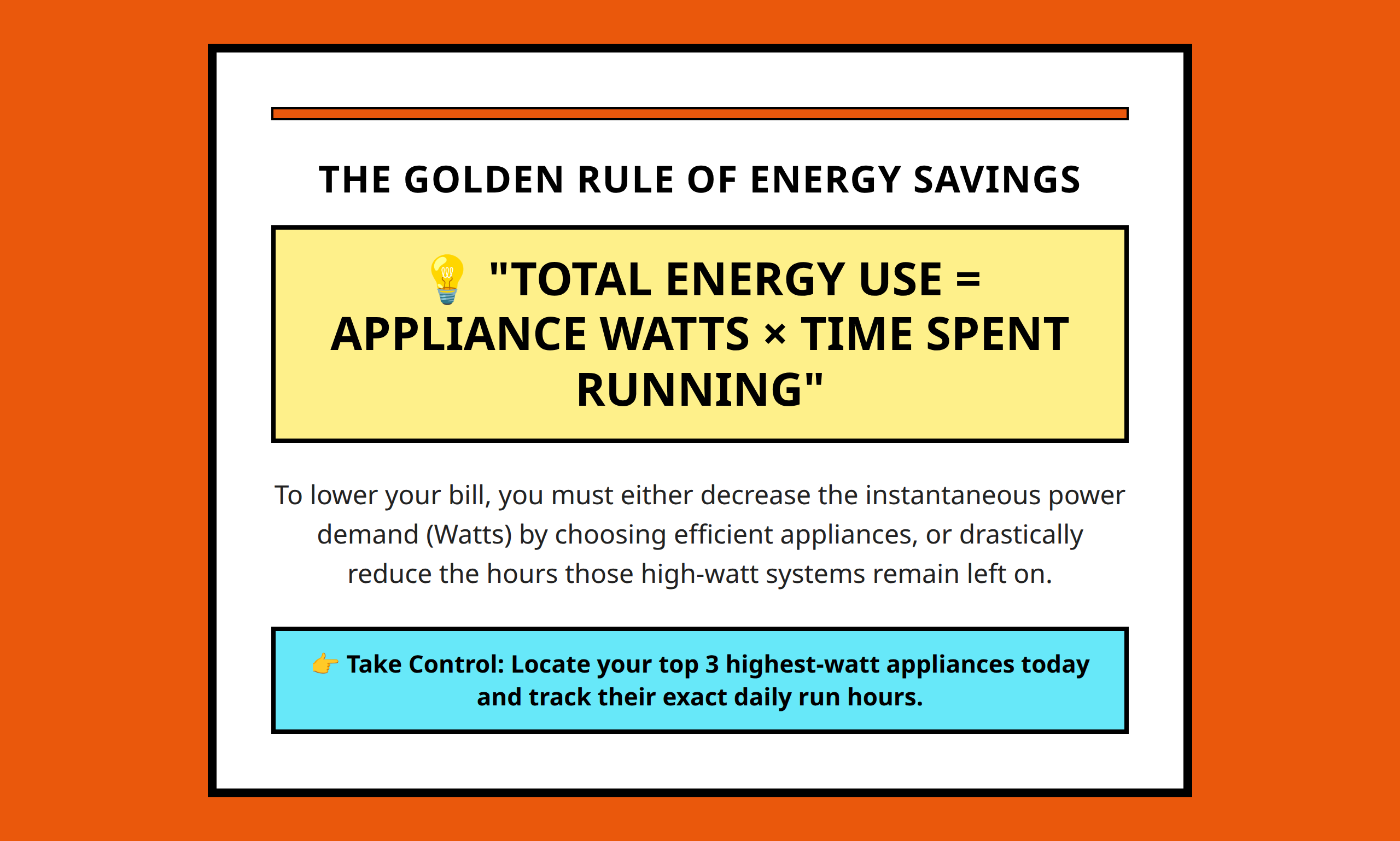
Energy is measured in kilowatt-hours (kWh). This is what your utility bill actually charges you for. It combines power and time—how much electricity was used over a period.
This difference matters because a device that uses moderate power for a long time can consume more energy than a high-power device used briefly.
A simple example makes this clear. A 100-watt light bulb running for 10 hours uses 1,000 watt-hours of electricity, which equals 1 kilowatt-hour. That means a single light left on all day can contribute directly to your monthly bill in a measurable way.
Even smaller devices matter. A night-light, for example, may use very little power, but if it stays on continuously, it slowly accumulates energy use hour by hour. Over a month, that steady usage becomes noticeable on the bill.
Where Electricity Goes Inside the Home
Electricity in a home does not disappear randomly—it flows into specific systems and devices. Understanding where it goes is the first step toward controlling it.
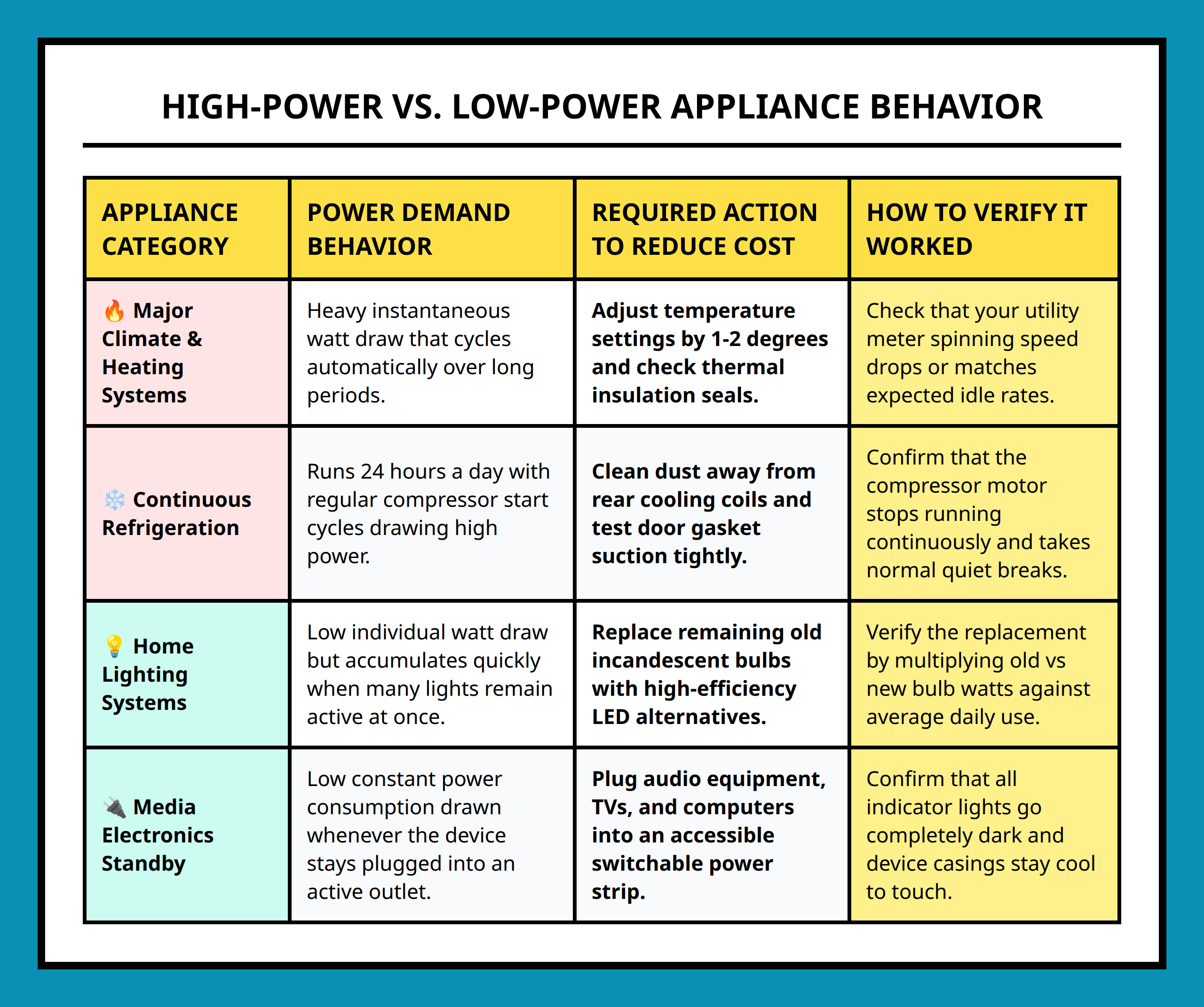
Most household electricity is used by appliances. These include lighting, refrigeration, cooking devices, laundry machines, and everyday electronics. Each one contributes differently depending on how often it runs and how much power it draws.
Refrigerators, for example, operate continuously. Even though they cycle on and off, they are always connected and always consuming some level of energy over time. This makes them one of the most consistent contributors to household electricity use.
Lighting systems also play a role. While a single bulb may not use much energy, lighting is often spread across many rooms and used for long periods, especially during evening hours.
Then there are electronics and standby loads. Devices such as televisions, computers, and chargers can continue to draw small amounts of electricity even when not actively in use. These small flows add up across multiple devices.
Other major contributors include heating, cooling, and hot water systems in some homes, especially where these functions rely on electricity rather than gas or other fuels. These systems can significantly increase total household consumption because of their high power demand.
Conducting a Simple Home Electrical Energy Audit
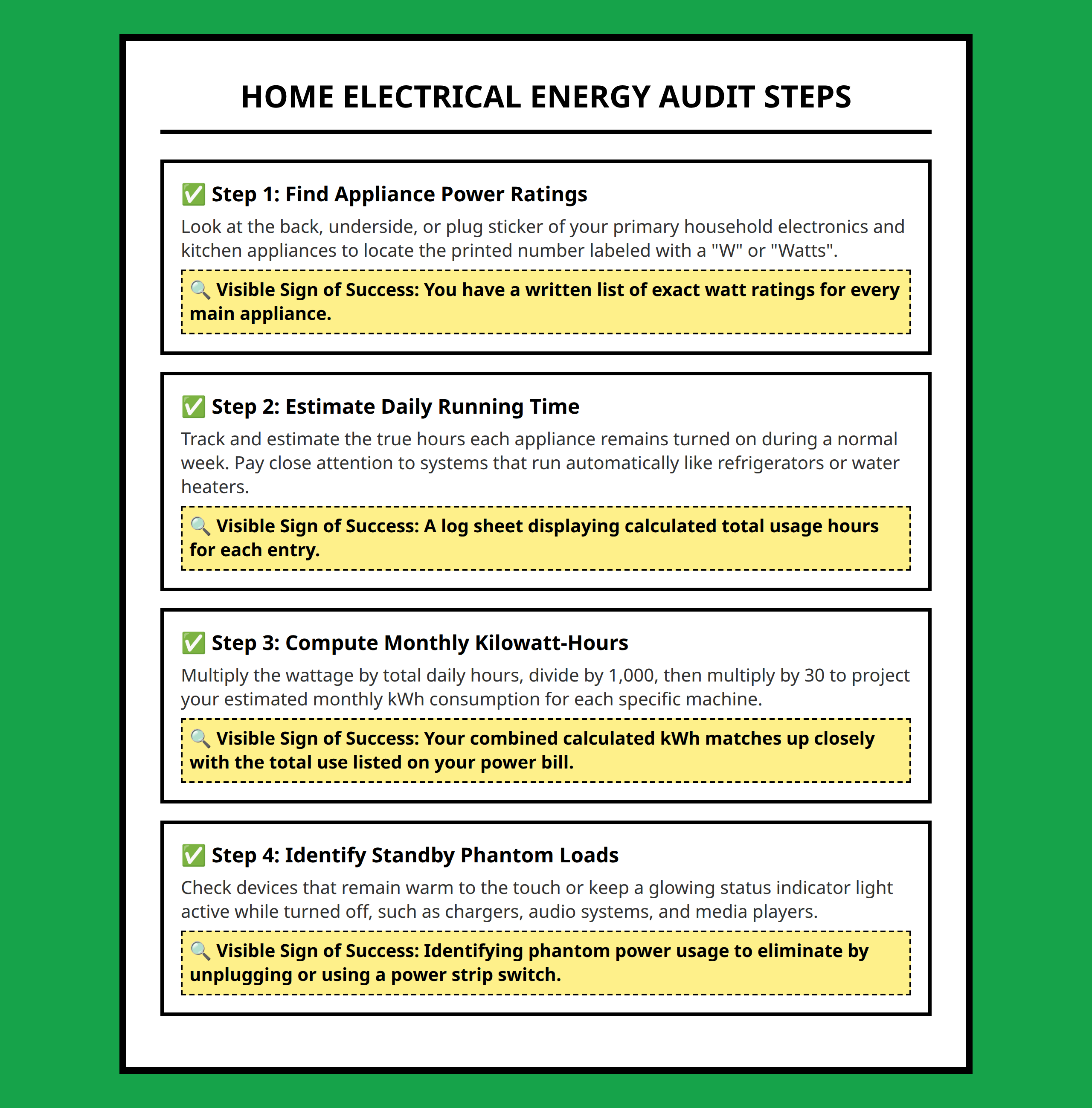
One of the most practical ways to understand electricity use is to perform a simple energy audit. This means examining each appliance and estimating how much electricity it uses over time.
The process starts by identifying the watt rating of each device. This information is usually found on the appliance label or in its manual. Once you know the wattage, you estimate how many hours per day the device runs.
From there, you calculate energy use in kilowatt-hours. The basic idea is simple: higher wattage and longer use time both increase total consumption.
For example, a household might find that a 100-watt light bulb used for 5 hours per day consumes about 0.5 kilowatt-hours daily. Multiply that across multiple bulbs and rooms, and lighting becomes a visible part of the energy profile.
A useful approach is to track usage over a full month. This helps reveal patterns that are not obvious day-to-day. A device that seems minor in isolation can become significant when multiplied over time.
Energy audits also reveal “hidden users”—devices that are always plugged in or running in the background. These often include entertainment systems, routers, or appliances with standby modes.
By breaking the home into individual components, electricity use stops being mysterious and becomes measurable.
Reducing Electrical Consumption Without Sacrificing Comfort
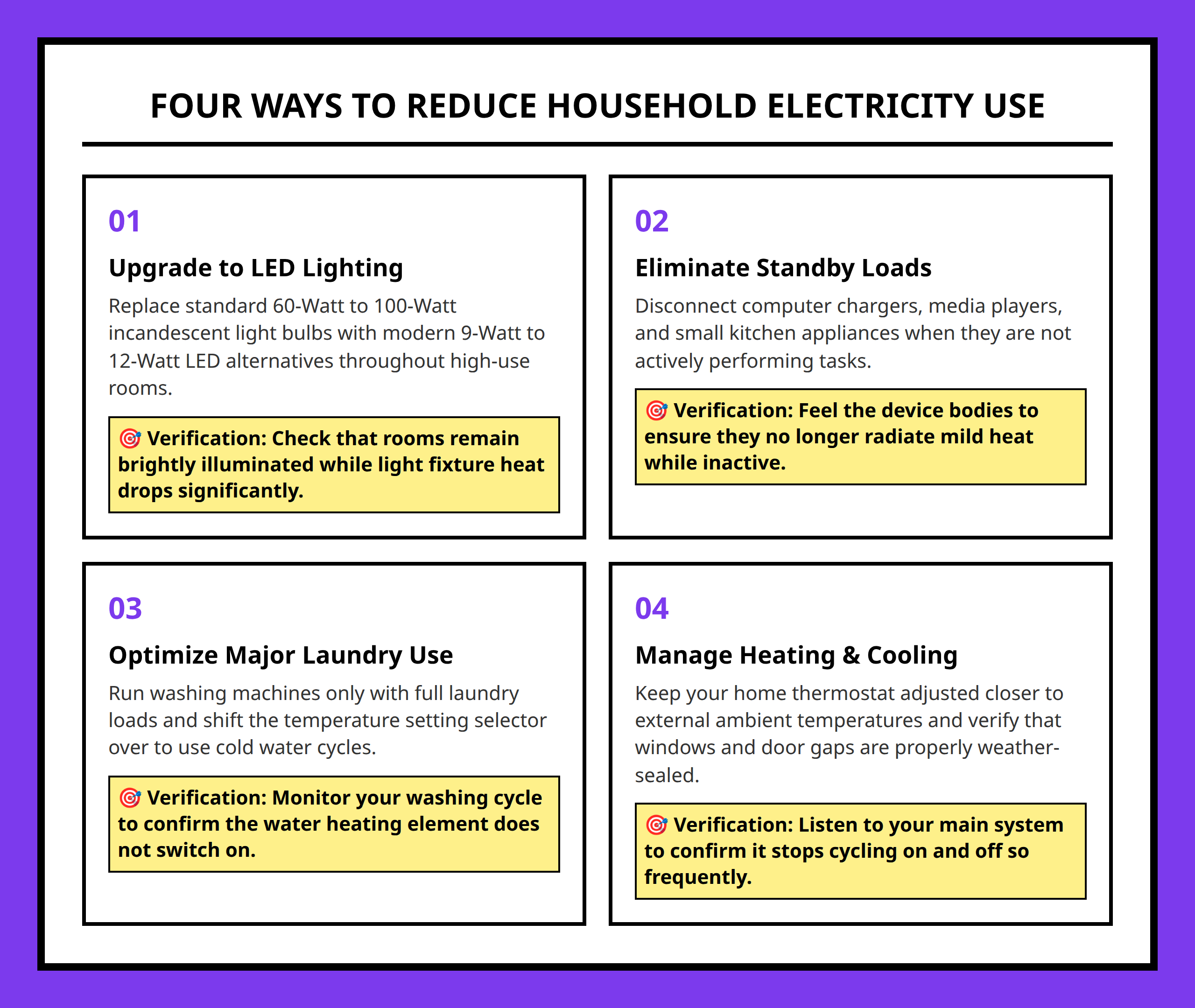
Reducing electricity use is not about removing comfort. It is about identifying where energy is being used inefficiently and making small adjustments that add up.
One of the most effective changes is improving lighting efficiency. Replacing inefficient bulbs with more efficient lighting reduces the power needed for the same level of brightness. Because lighting is used daily, even small improvements have long-term impact.
Another major opportunity is reducing standby power. Many devices continue drawing electricity even when not in active use. Unplugging or using power strips for groups of devices can reduce this hidden consumption.
Appliance behavior also matters. Running washing machines or dishwashers only with full loads reduces the number of cycles required, which lowers total energy use over time.
The key idea is not restriction—it is awareness. Once you see where electricity is going, it becomes easier to make decisions that reduce waste without changing your lifestyle dramatically.
For example, a household might discover that small lighting adjustments and standby reductions together have more impact than trying to change a single large appliance.
FAQ
- Watt: A unit that measures how much electrical power a device uses at a specific moment.
- Kilowatt-hour (kWh): A unit of energy that measures electricity use over time and is used for billing.
- Appliance load: The amount of electricity a device or system consumes during operation.
- Energy audit: A process of reviewing and calculating how much electricity different devices in a home use.
- Standby power: Electricity used by devices even when they are not actively in use.
Household electricity use becomes far less confusing once it is broken into watts and kilowatt-hours. Instead of a single unpredictable number on a bill, you begin to see a map of how energy moves through your home.
The most useful next step is simple: pick one room and list every electrical device in it. Estimate how long each device runs in a day. That small exercise often reveals more about your electricity use than the monthly bill ever could.
References:
- https://www.eia.gov/energyexplained/use-of-energy/electricity-use-in-homes.php
- https://www.energysage.com/electricity/house-watts/
- https://www.reliant.com/en/residential/help-support/information-center/energy-savings-tips/home-improvement-central/home-energy-efficiency-improvement-guide/energy-use-in-your-home
- https://www.constellation.com/energy-101/energy-education/average-home-power-usage.html
- https://www.energy.gov/energysaver/reducing-electricity-use-and-costs
- https://energy.ecoflow.com/us/blog/what-consumes-the-most-electricity-in-a-house
- https://www.c2es.org/content/home-energy-use/
- https://www.yellowlite.com/blogs/how-many-kwh-does-a-house-use-per-day-understanding-your-home-s-energy-needs/
- https://nepower.com/blog/Home-Energy-Consumption-Analysis
