Energy literacy means understanding how energy is measured—using units like BTUs, watts, and kilowatt-hours—so you can compare fuels, track electricity use, and make sense of both your home energy bill and global energy consumption in a clear, practical way.
Most people interact with energy every single day without really understanding what the numbers mean. Electricity bills show kilowatt-hours, heating fuels are sold in gallons or therms, and discussions about climate or energy policy often mention quads. It can feel like multiple languages stacked on top of each other.
Once these units are connected through a common framework, energy becomes much easier to understand. Instead of confusion, you start seeing patterns: where energy comes from, how it is used, and where it is wasted.
Takeaways
- Energy becomes understandable only when converted into common units like BTUs and kilowatt-hours.
- Most home energy use is hidden in small daily actions that accumulate over time.
- Global energy systems use extremely large units (quads) because the scale is enormous.
The Language of Energy: BTUs, Watts, and Kilowatt-Hours
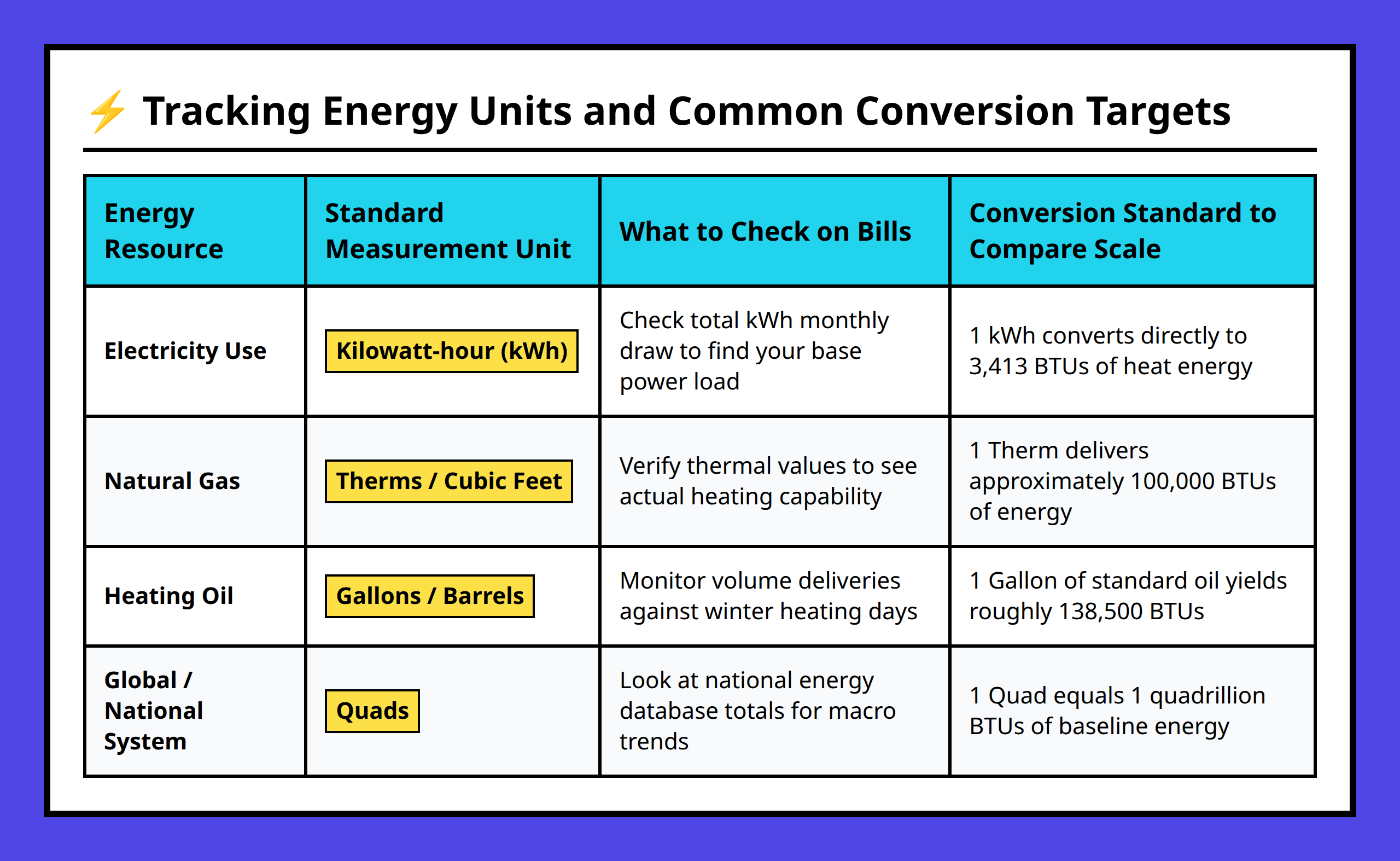
Energy measurement starts with three core ideas: how much energy exists, how fast it is used, and how it accumulates over time. These are expressed through BTUs, watts, and kilowatt-hours.
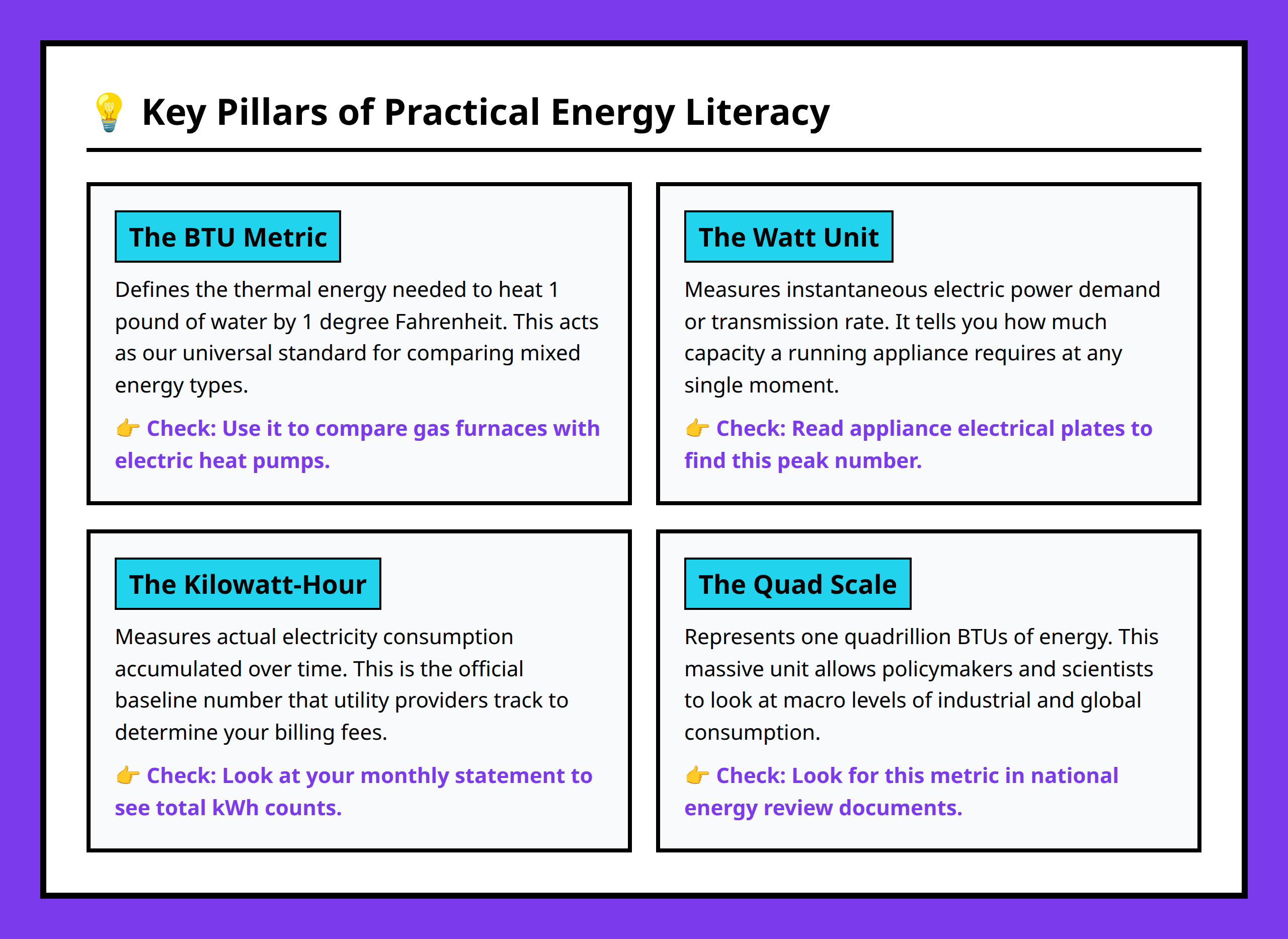
A BTU (British Thermal Unit) is a basic unit of energy. It represents the amount of energy required to raise the temperature of one pound of water by one degree Fahrenheit. Even though it sounds technical, it is actually a very physical idea—you can imagine warming a small amount of water by a tiny amount.
At a practical level, a BTU is quite small. A simple wooden match releases roughly one BTU of energy when burned completely. That gives a sense of scale: everyday household energy use involves millions of BTUs over time.
Electricity, on the other hand, is measured differently. A watt measures how fast energy is being used at a specific moment. A 100-watt light bulb, for example, is demanding 100 watts of power while it is on. But that number alone does not tell the full story.
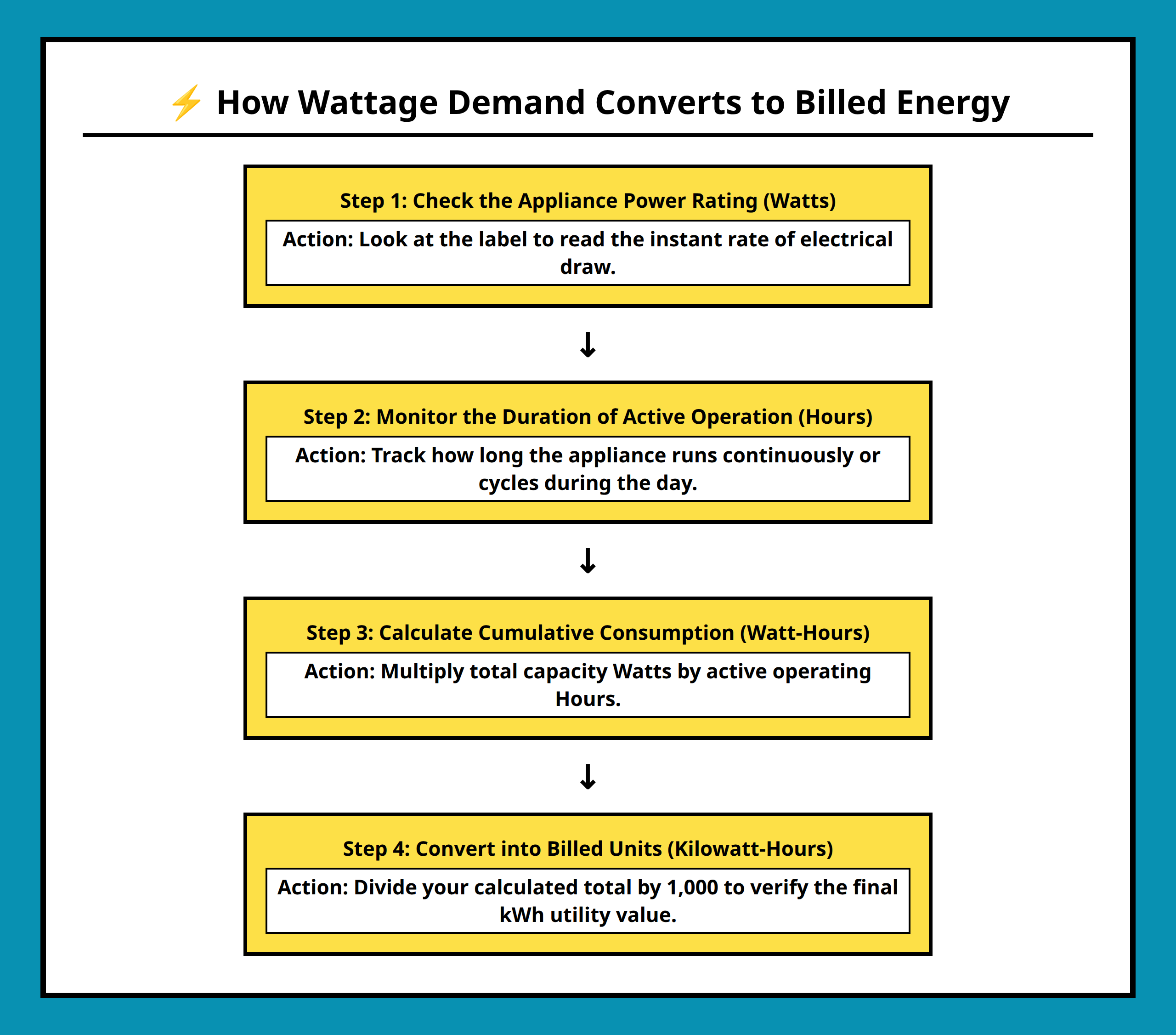
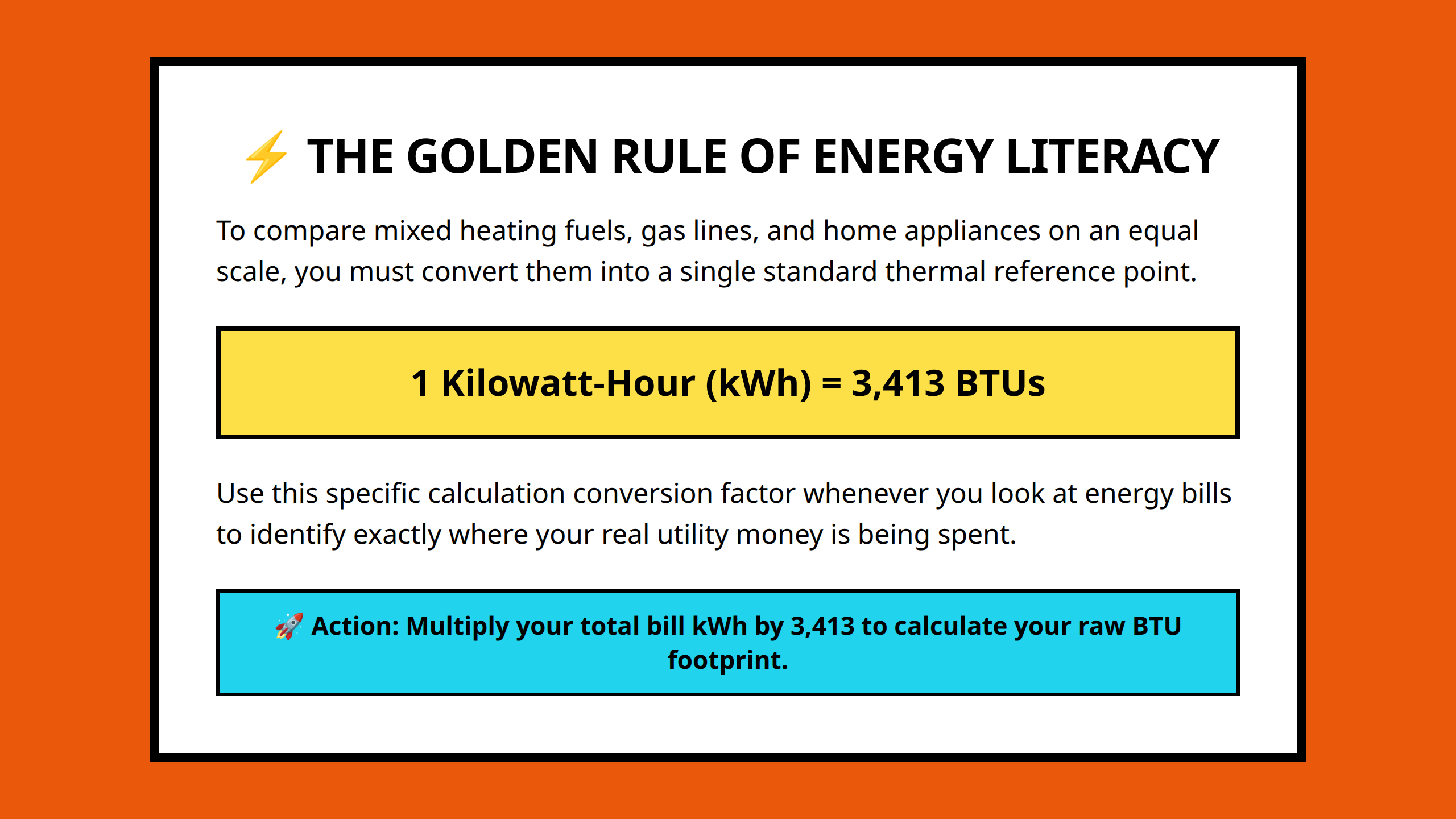
To measure total energy use, watts must be combined with time. That is where kilowatt-hours (kWh) come in. One kilowatt-hour equals 1,000 watts used for one hour. This same unit also equals 3,413 BTUs, which allows electricity to be compared directly with fuels like oil or gas.
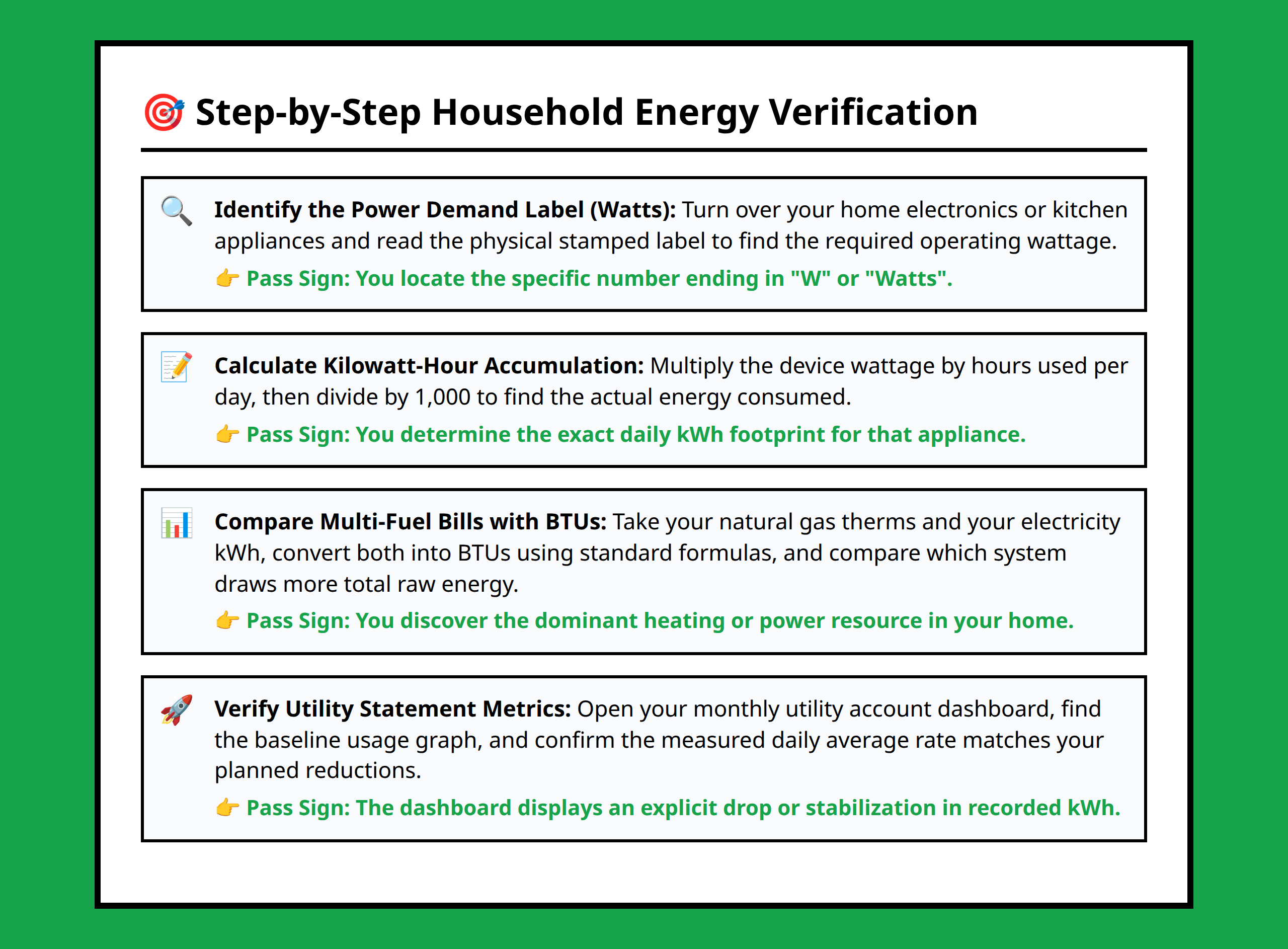
For example, if a 100-watt bulb stays on for 10 hours, it uses 1,000 watt-hours or 1 kWh of energy. That single unit now represents both electricity usage and a measurable amount of heat energy in BTUs.
Comparing Fuels Using a Common Energy Standard
Different fuels are sold in different ways. Oil is measured in gallons, natural gas in cubic feet or therms, and electricity in kilowatt-hours. Without a shared unit, comparing them would be like comparing distance in miles, kilometers, and steps at the same time.
That is why BTUs act as a universal standard. They allow different fuels to be translated into a common language of energy. Once everything is converted, it becomes easier to understand which energy sources are larger, more efficient, or more expensive in real terms.
For example, a gallon of oil contains a large amount of energy when converted into BTUs, while natural gas requires a different unit of volume but can also be converted into the same BTU scale. Electricity, although produced from many different sources, also fits into this same system through its BTU equivalent.
This shared measurement system is essential for understanding real-world energy decisions. Without it, comparisons between heating fuels, electricity usage, and transportation energy would remain unclear and inconsistent.
From Homes to the Planet: Understanding Large-Scale Energy (Quads)
When energy is measured at a global scale, the numbers become extremely large. That is why a higher-level unit called the quad is used. One quad represents one quadrillion BTUs.
This unit is necessary because household-level measurements quickly become too small to describe global systems. Entire countries and the world consume energy in amounts that reach hundreds of quads per year.
For example, global energy use is measured in hundreds of quads annually, showing just how massive human energy consumption really is. At this scale, small changes in efficiency or fuel use can have large global effects.
On a national level, energy use is also expressed in quads to make comparison easier. This allows policymakers and analysts to track trends over time, such as whether energy demand is increasing or becoming more efficient.
Understanding quads helps shift perspective. What feels like a small decision at home—like leaving lights on or upgrading an appliance—becomes part of a much larger system when multiplied across millions of households.
Common Misunderstandings About Energy Use
One of the most common misunderstandings about energy is how small uses add up over time. A single device may seem insignificant, but energy consumption depends on duration as much as power level.
For example, a small light bulb or appliance may not draw much power individually, but if it runs for many hours, its total energy use becomes meaningful. This is why kilowatt-hours are more useful than watts alone—they capture both intensity and time.
Another misconception is that energy use is always obvious. In reality, many household systems use energy continuously without drawing attention. Heating systems, cooling systems, and hot water systems are often the largest contributors to overall consumption.
Even when individual devices seem efficient, the combined effect of multiple systems operating throughout the day can lead to high overall energy use. This is why understanding total consumption matters more than focusing on a single appliance.
A useful way to think about this is to imagine a household where many small devices run quietly in the background. One might think the impact is minor, but over a month, those small uses accumulate into significant kilowatt-hour totals.
FAQ
- BTU (British Thermal Unit): A unit of energy based on heating one pound of water by one degree Fahrenheit.
- Kilowatt-hour (kWh): A unit of electrical energy equal to 1,000 watts used over one hour.
- Watt: A measure of how fast electrical energy is being used at a given moment.
- Quad: A very large energy unit equal to one quadrillion BTUs, used for national and global energy measurement.
- Energy literacy: The ability to understand and interpret how energy is measured, used, and compared across systems.
Understanding energy literacy changes how you interpret everything from your electricity bill to global energy discussions. Instead of seeing isolated numbers, you begin to see connected systems where every unit tells part of a larger story about how energy is produced, used, and wasted.
A practical next step is to take a recent electricity bill and translate the kilowatt-hours into approximate BTUs. That simple conversion often reveals just how much energy is flowing through a home every month—and where the biggest opportunities for change might be.
References:
- https://www1.eere.energy.gov/education/pdfs/energy_literacy_1_0_high_res.pdf
- https://www.sciencedirect.com/science/article/pii/S2214629625005006
- https://providerpower.com/power-to-help/mean-energy-literate/
- https://poweredbyelevation.com/post/are-you-energy-literate/
- https://ocm.iccrom.org/documents/energy-literacy-essential-principles-energy-education
- https://peer.asee.org/55301.pdf
- https://www.youtube.com/watch?v=lfHN_HGuE3M
- https://www.mdpi.com/1996-1073/16/21/7235
- https://instituteofsustainabilitystudies.com/insights/lexicon/why-increasing-energy-literacy-is-important-for-the-energy-transition/
- https://taraenergy.com/blog/what-is-energy-a-guide-to-understanding-energy/
- https://www.4tu.nl/resilience/resources/4as-framework/
- https://beeindia.gov.in/sites/default/files/1Ch2.pdf
