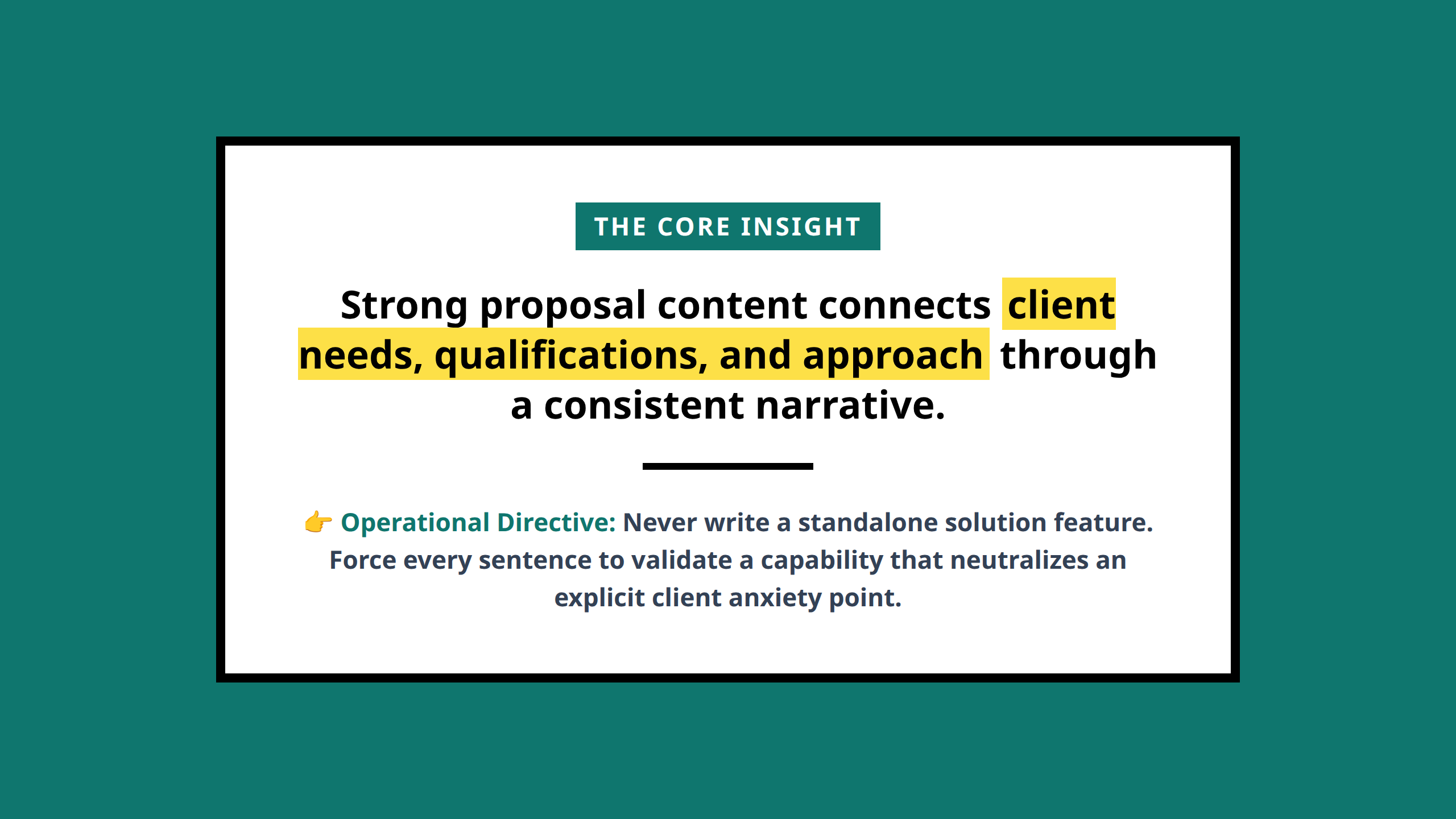
Proposal content writing is most effective when every section reinforces a clear narrative. Instead of presenting disconnected facts, strong proposals connect client needs, proposed solutions, and qualifications into a consistent story that helps evaluators understand why your approach deserves consideration.
Many proposal teams struggle with content because they focus on gathering information rather than building a message. The result is often a proposal filled with technical details that are accurate but not persuasive.
I find that the strongest proposals rarely succeed because they contain more information. They succeed because the information is organized around what matters most to the client. Every section contributes to the same central message.
That is where a proposal narrative becomes valuable. It provides structure, focus, and consistency across the entire document.
Takeaways
- Proposal content should help evaluators understand how client needs will be addressed.
- A strong narrative connects requirements, solutions, and qualifications throughout the proposal.
- Every section should reinforce the same core message.
- Relevant information is more valuable than large amounts of unrelated detail.
- Consistency across sections improves clarity and credibility.
The Purpose of Proposal Content
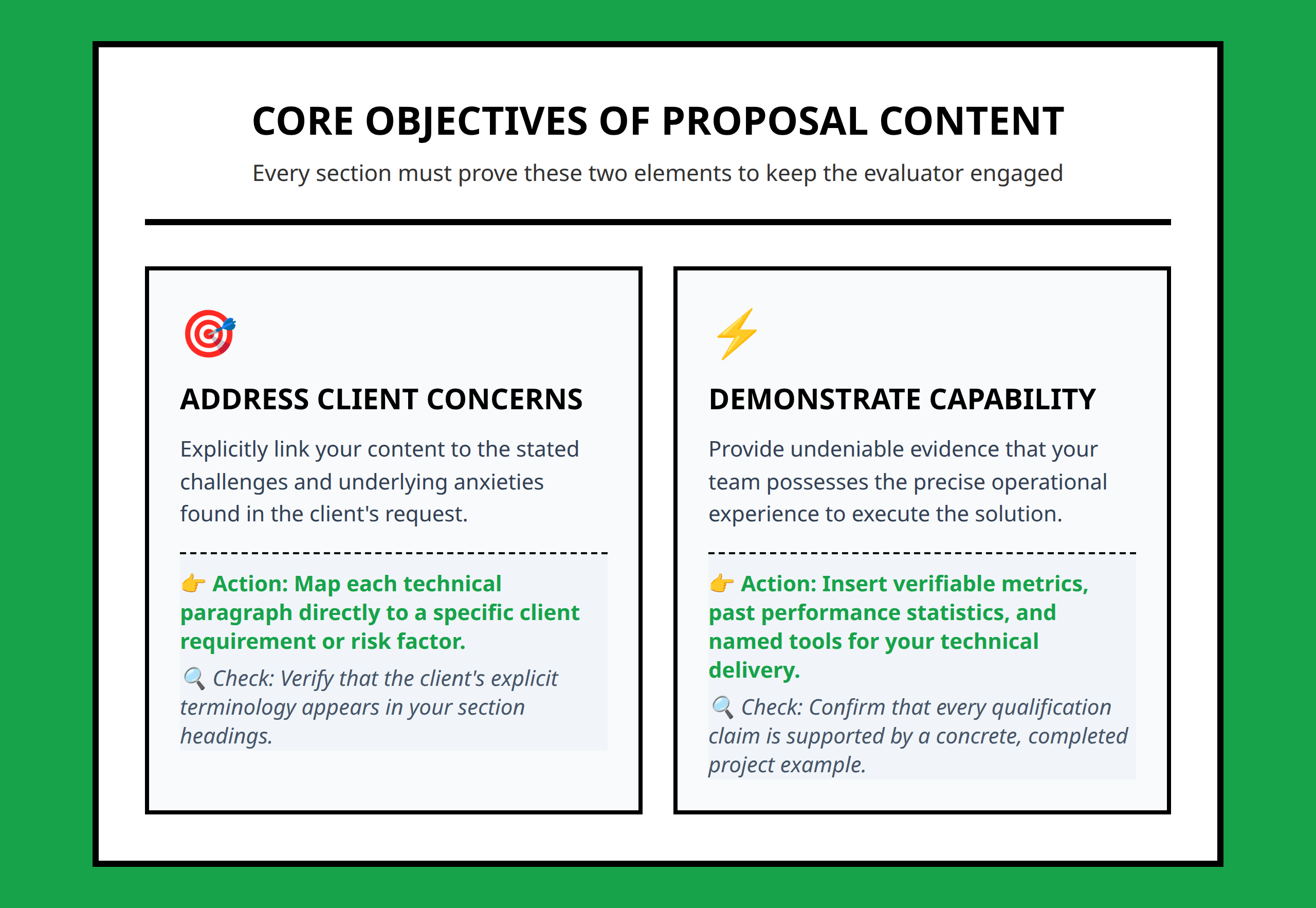
The primary purpose of proposal content is not simply to provide information. It is to demonstrate understanding, capability, and relevance.
Evaluators are typically reviewing multiple submissions. They are looking for evidence that a proposer understands the requirements, has a practical approach, and possesses the qualifications needed to perform the work successfully.
This means content should be written with the evaluator’s perspective in mind.
A common mistake is filling proposal sections with company information that may be impressive but does not directly address client concerns. Experience, credentials, and achievements matter only when they help explain why the proposed approach is appropriate for the opportunity.
Consider an illustrative example. A proposal team may include several pages describing organizational history. If that history does not help the evaluator understand the team’s ability to deliver the requested work, its value is limited. The same space could be used to demonstrate relevant experience or explain the proposed approach more clearly.
The best proposal content answers an unspoken question that evaluators continually ask: Why is this information important to this specific opportunity?
The Proposal Content Framework
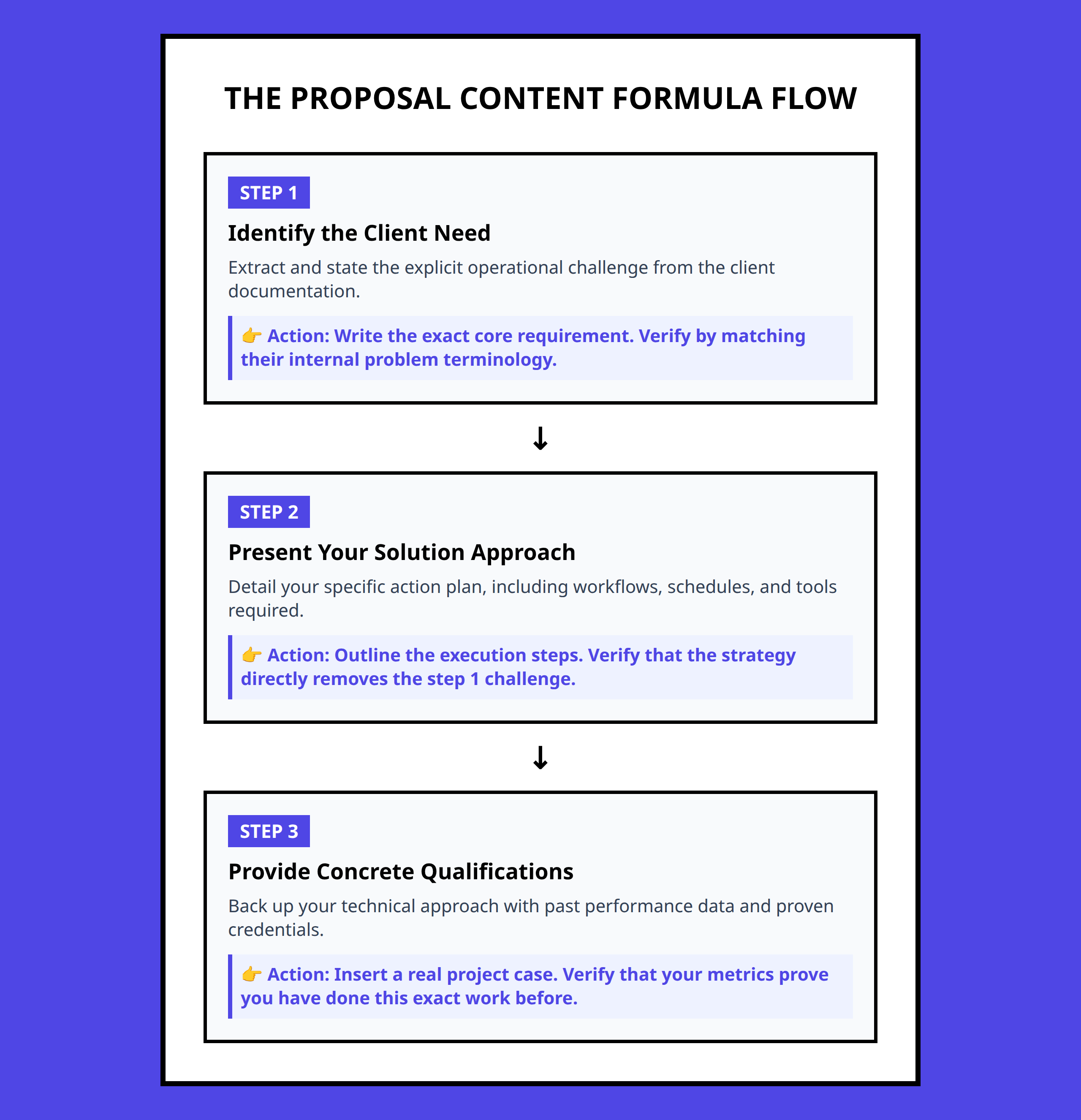
A practical proposal content framework connects three essential elements: the client’s need, the proposed solution, and the team’s qualifications.
When these elements work together, proposal sections feel coherent rather than fragmented.
Start With the Client’s Need
Every major section should begin with a clear understanding of the client’s requirement, challenge, objective, or concern.
This keeps the proposal focused on the opportunity rather than the proposing organization.
Readers should quickly see that the proposal team understands what matters most to them.
Explain the Proposed Approach
After establishing the need, the proposal should explain how the team intends to address it.
The approach should feel connected to the requirement rather than appearing as a generic solution that could be inserted into any proposal.
Specific explanations often create more confidence than broad claims.
Support the Approach With Qualifications
Qualifications become more persuasive when they support the proposed solution.
Rather than listing credentials separately, strong proposal content demonstrates why previous experience, expertise, or capabilities make the proposed approach credible.
| Content Element | Purpose |
|---|---|
| Client Need | Shows understanding of requirements |
| Proposed Solution | Explains how requirements will be addressed |
| Qualifications | Demonstrates ability to execute successfully |
When these three elements appear consistently throughout the proposal, a clear narrative begins to emerge.
Building a Consistent Proposal Narrative
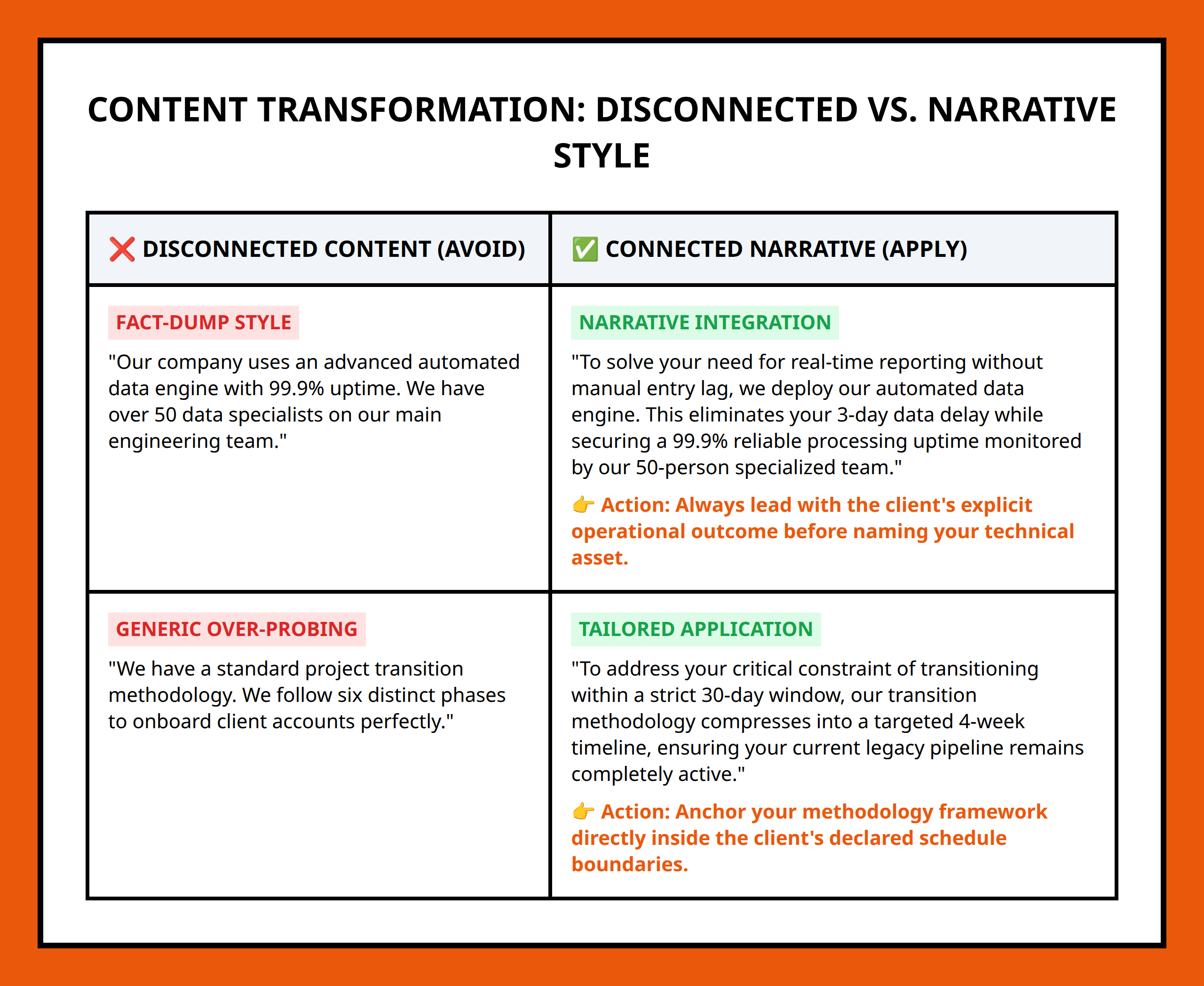
A proposal narrative is the central message that ties the entire document together.
Without a narrative, proposal sections may be technically correct but feel disconnected. Different contributors may emphasize different priorities, causing the proposal to read like separate documents combined together.
With a narrative, each section reinforces the same overall message.
For example, if a proposal’s central theme is reliability, then the technical approach, project-management plan, staffing strategy, and experience sections should all support that theme. The proposal becomes easier to understand because every section points in the same direction.
I often think of narrative as a filter. Before adding content, ask whether it strengthens the proposal’s central message. If it does not, it may belong elsewhere or not belong at all.
Common Proposal Writing Mistakes
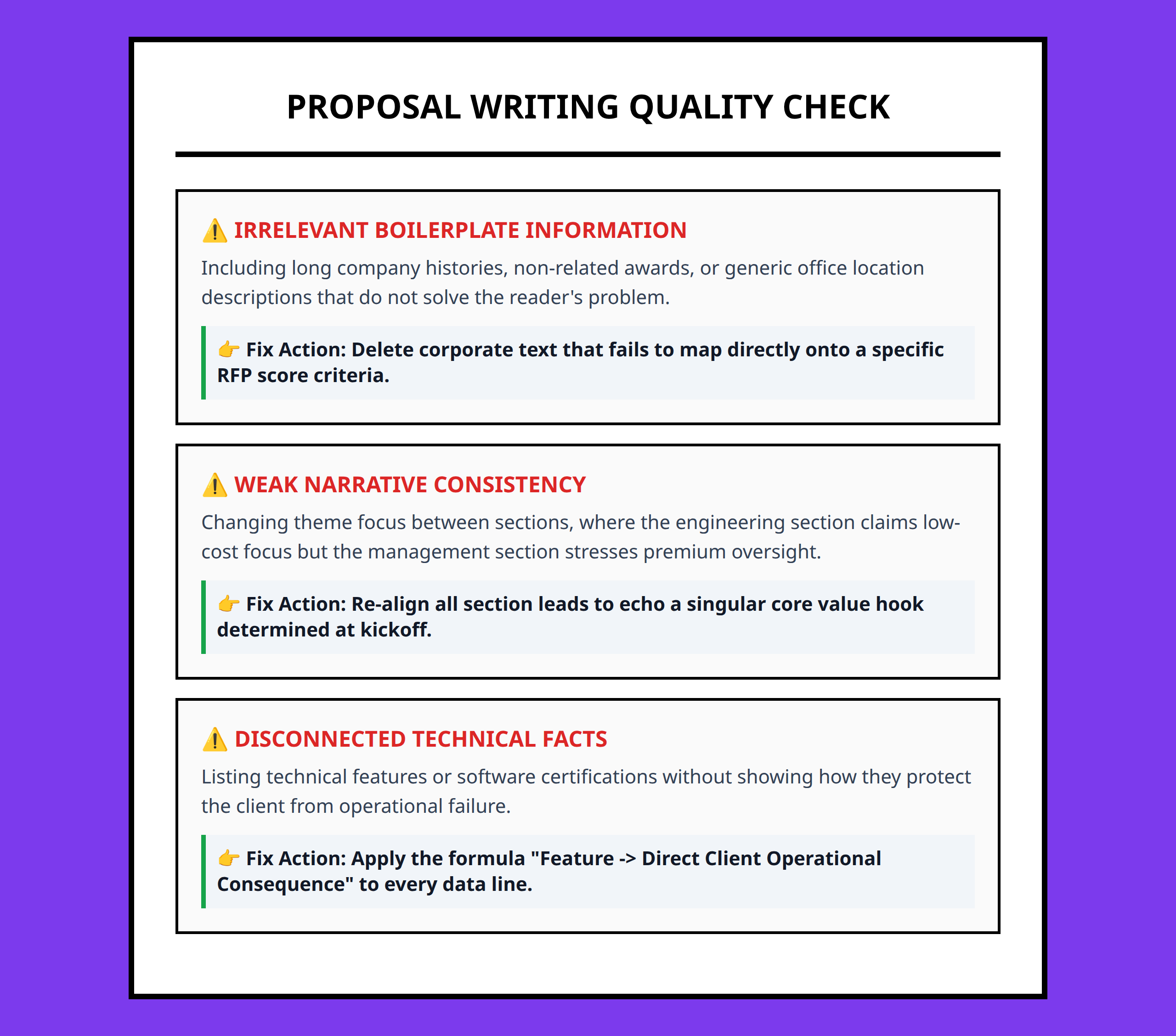
Most proposal-writing problems occur when relevance and consistency are lost.
Including Information Simply Because It Exists
Many organizations possess a large amount of content. The challenge is deciding what to leave out.
Information should be included because it helps the proposal achieve its objective, not because it is available.
More content does not automatically create a stronger proposal.
Allowing Sections to Tell Different Stories
When contributors work independently, each section may emphasize different strengths or priorities.
This can weaken the proposal’s overall message.
Readers should encounter the same central narrative throughout the document rather than a collection of unrelated themes.
Prioritizing Technical Detail Over Reader Relevance
Technical detail is important, but detail alone does not create persuasion.
Evaluators need enough information to understand the proposed solution, but they also need clear explanations of why the information matters.
The goal is not maximum detail. The goal is useful detail that supports decision-making.
FAQ
The Difference Between Information and Persuasion
Many proposals contain plenty of information but very little persuasion.
The difference is structure. Strong proposal content organizes information around client needs, proposed solutions, and supporting qualifications. That structure creates a narrative that guides readers through the proposal and helps them understand why the approach deserves consideration.
Before finalizing your next proposal section, ask one simple question: does this content strengthen the central message or merely add more information? The answer often reveals exactly what should stay and what should be removed.
- Proposal Narrative: The central message that connects all major sections of a proposal into a consistent story.
- Proposal Content: The written material used to explain requirements, solutions, qualifications, and other proposal information.
- Qualifications: Experience, expertise, skills, and capabilities that support the ability to perform the proposed work.
- Proposal Strategy: The overall approach used to position a proposal competitively and communicate value.
- Relevance: The degree to which information directly supports client requirements and evaluation priorities.
