Active solar heating systems capture solar energy through collectors and transfer heat via liquid or air to warm homes efficiently.
Many homeowners start exploring solar energy expecting electricity savings, but quickly discover that heating works in a completely different way. Instead of producing electricity, some systems directly capture and move heat into the home. This shift in thinking is important because heating often represents a large part of household energy use.
Active solar heating systems are designed for exactly this purpose: capturing sunlight, converting it into heat, and distributing that heat through either liquid or air systems. Understanding how these systems move energy is the key to choosing the right setup for a home.
Takeaways
- Active solar heating systems focus on heat, not electricity generation.
- Heat can be moved through liquid or air depending on system design.
- Storage is essential because sunlight is not constant throughout the day.
- The right system depends on climate, space, and heating needs.
Overview of Active Solar Heating Technology
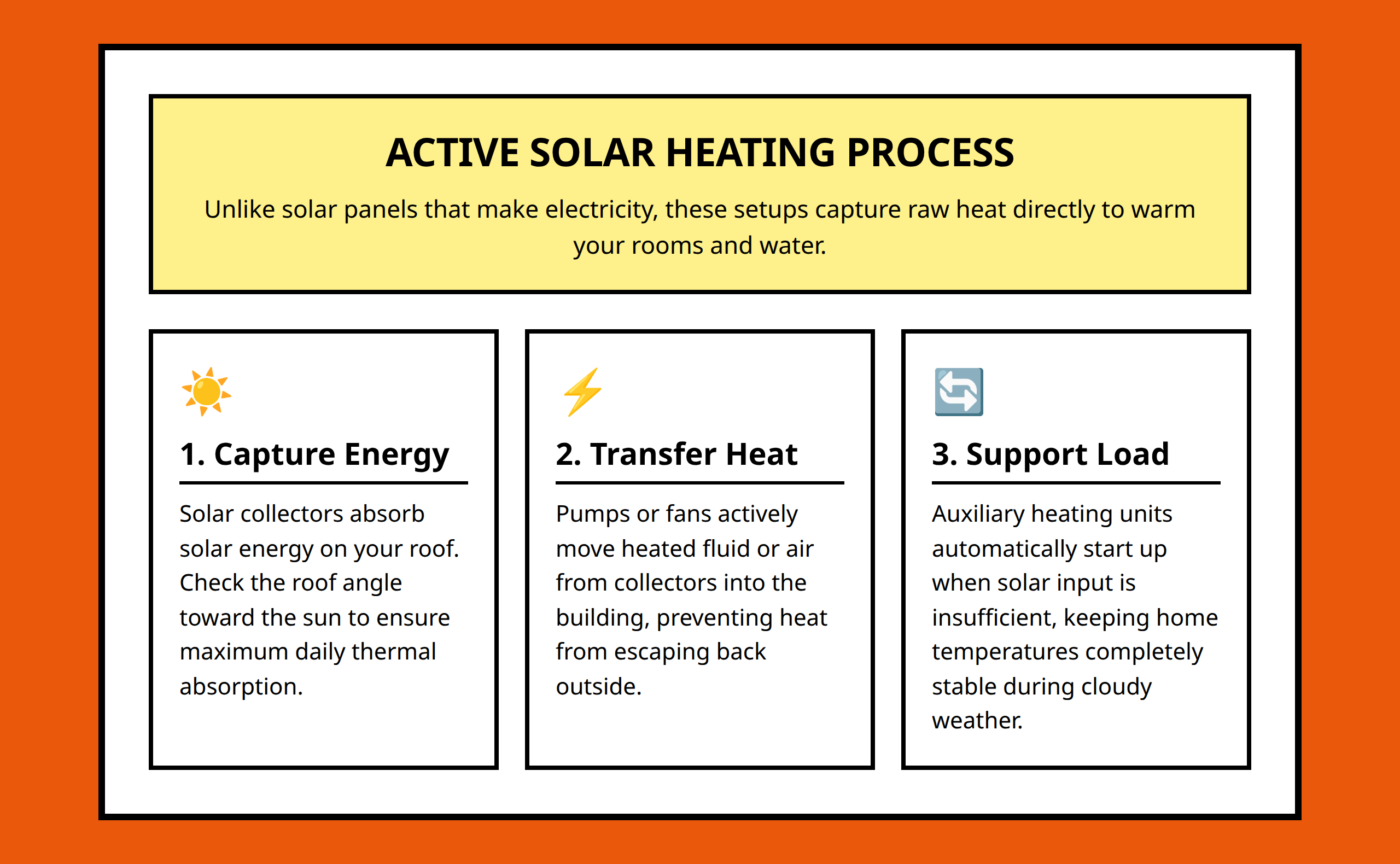
Active solar heating systems work by capturing solar energy and converting it directly into usable heat. Instead of generating electricity first, the system focuses on warming a medium—either liquid or air—that carries heat into the home.
Once heat is collected, it can be used immediately or stored for later use. Storage is especially important in residential systems because heating demand often continues after sunlight disappears in the evening.
In many real-world setups, auxiliary heating systems are still used as backup. This ensures comfort during cloudy days or periods when solar input is not strong enough to meet full heating demand.
The entire system is built around one idea: capture, transfer, and distribute heat as efficiently as possible across the home.
Liquid-Based Solar Heating Systems
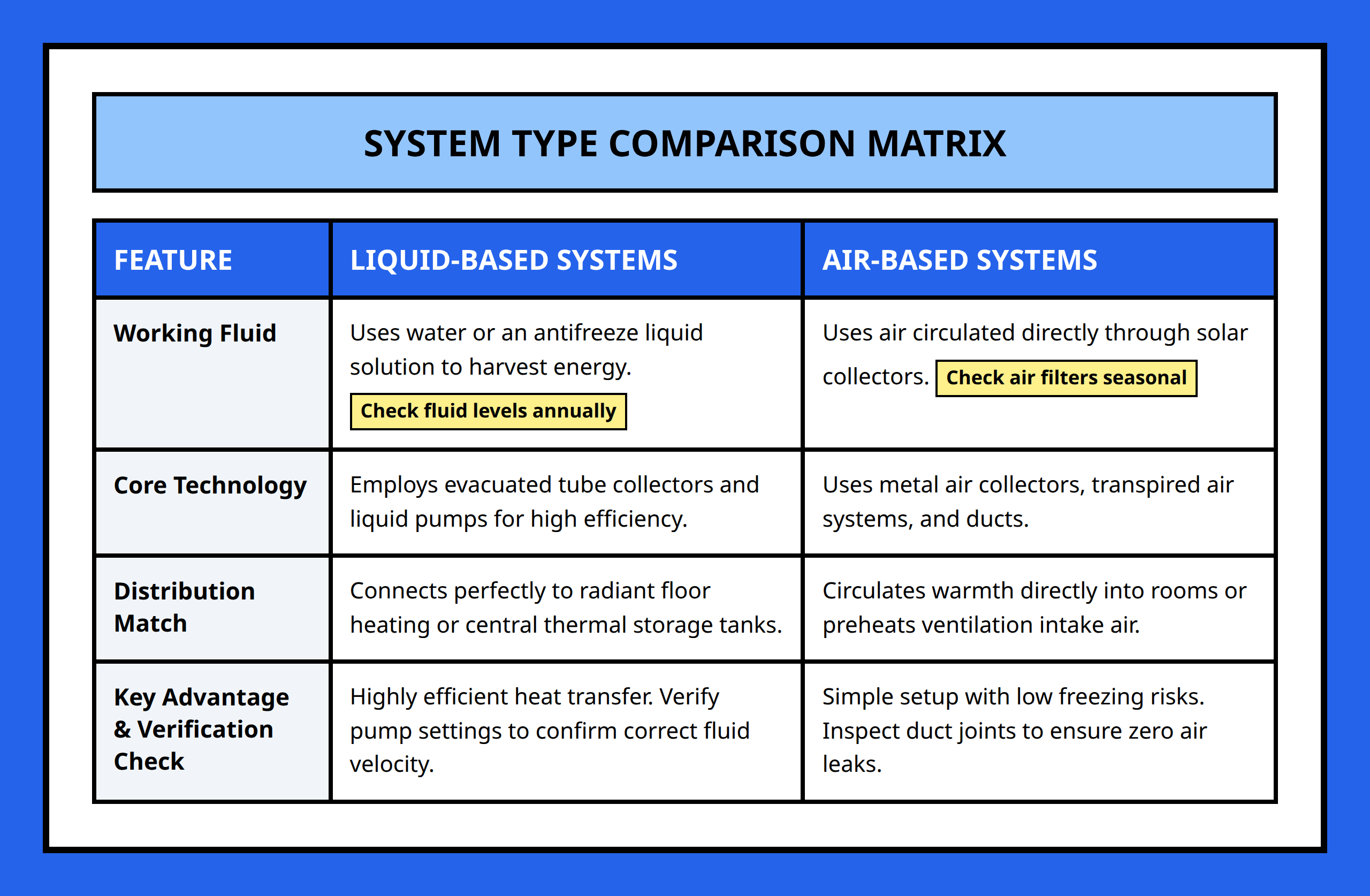
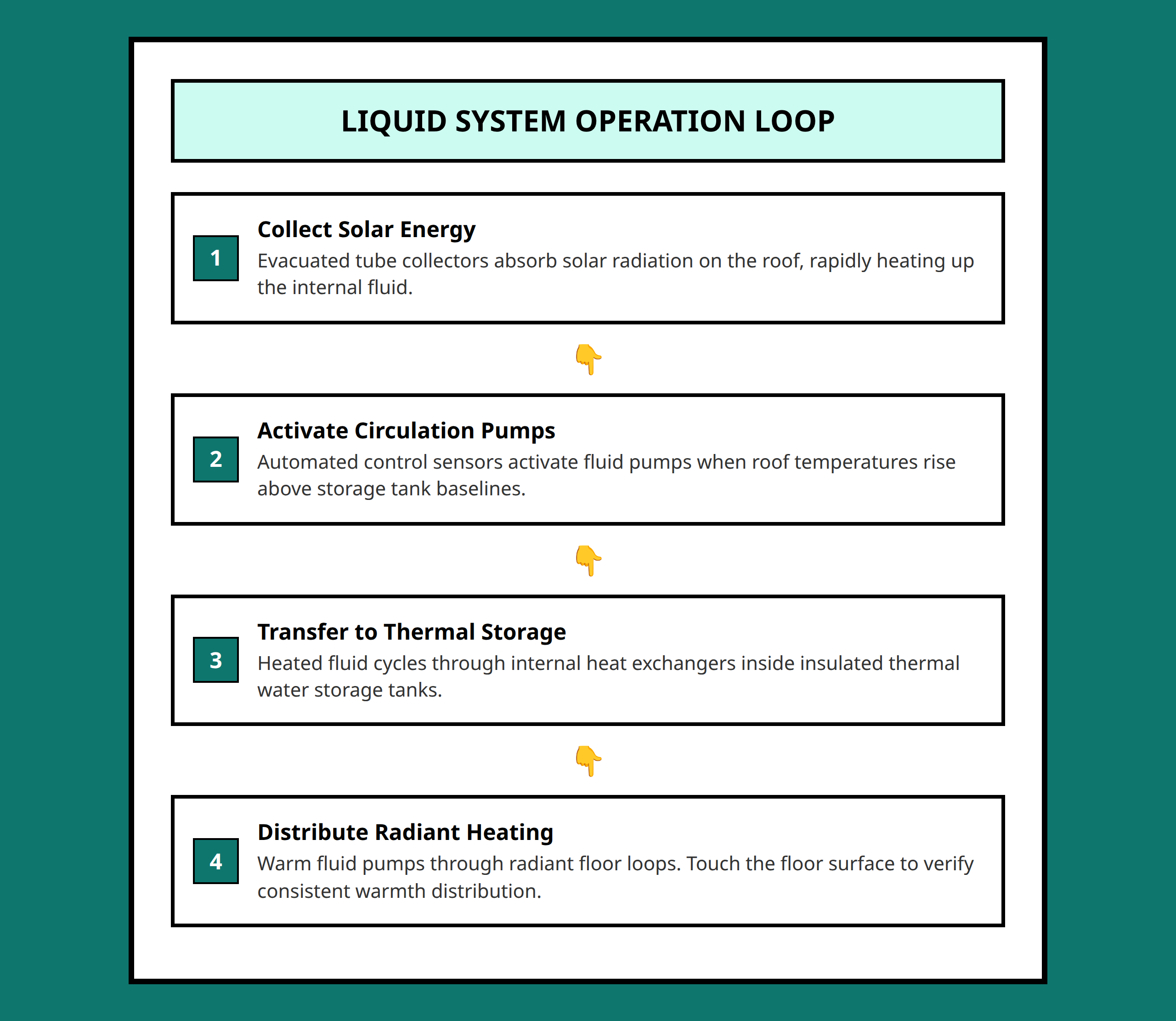
Liquid-based systems are one of the most common approaches to active solar heating. They use a fluid—usually water or a water-antifreeze mixture—to carry heat from solar collectors into the home.
The process starts at the collector, where sunlight heats the fluid. This warmed liquid is then circulated through pipes using pumps, transferring heat into storage tanks or directly into heating systems.
One widely used collector type is the evacuated tube collector. These systems are designed to reduce heat loss and improve efficiency by using insulated glass tubes. They are often chosen in colder climates where retaining heat is especially important.
Once heat is transferred, it is commonly stored in tanks. This stored heat can later be used for radiant heating systems, where warm water flows through pipes embedded in floors or walls to gently heat rooms.
The strength of liquid-based systems is their ability to store and move large amounts of heat efficiently. This makes them especially useful for whole-home heating or domestic hot water systems.
Air-Based Solar Heating Systems
Air-based solar heating systems work by directly heating air instead of liquid. Sunlight warms air inside solar collectors, and this heated air is then circulated into the building.
These systems can be used in different ways. In some setups, heated air is blown directly into living spaces for immediate warming. In others, air is used to preheat incoming ventilation air, reducing the workload on conventional heating systems.
One example of this technology is the transpired air collector. These systems use perforated surfaces to absorb sunlight and heat incoming air as it passes through tiny openings. Wall-mounted air collectors also serve a similar purpose by capturing solar energy on building surfaces.
Air-based systems are often simpler in design compared to liquid-based systems. They have fewer components like pumps and fluid storage tanks, which can make installation and maintenance easier.
However, because air holds less heat than liquid, these systems may be less efficient in storing thermal energy for long periods.
Heat Storage and Distribution Methods
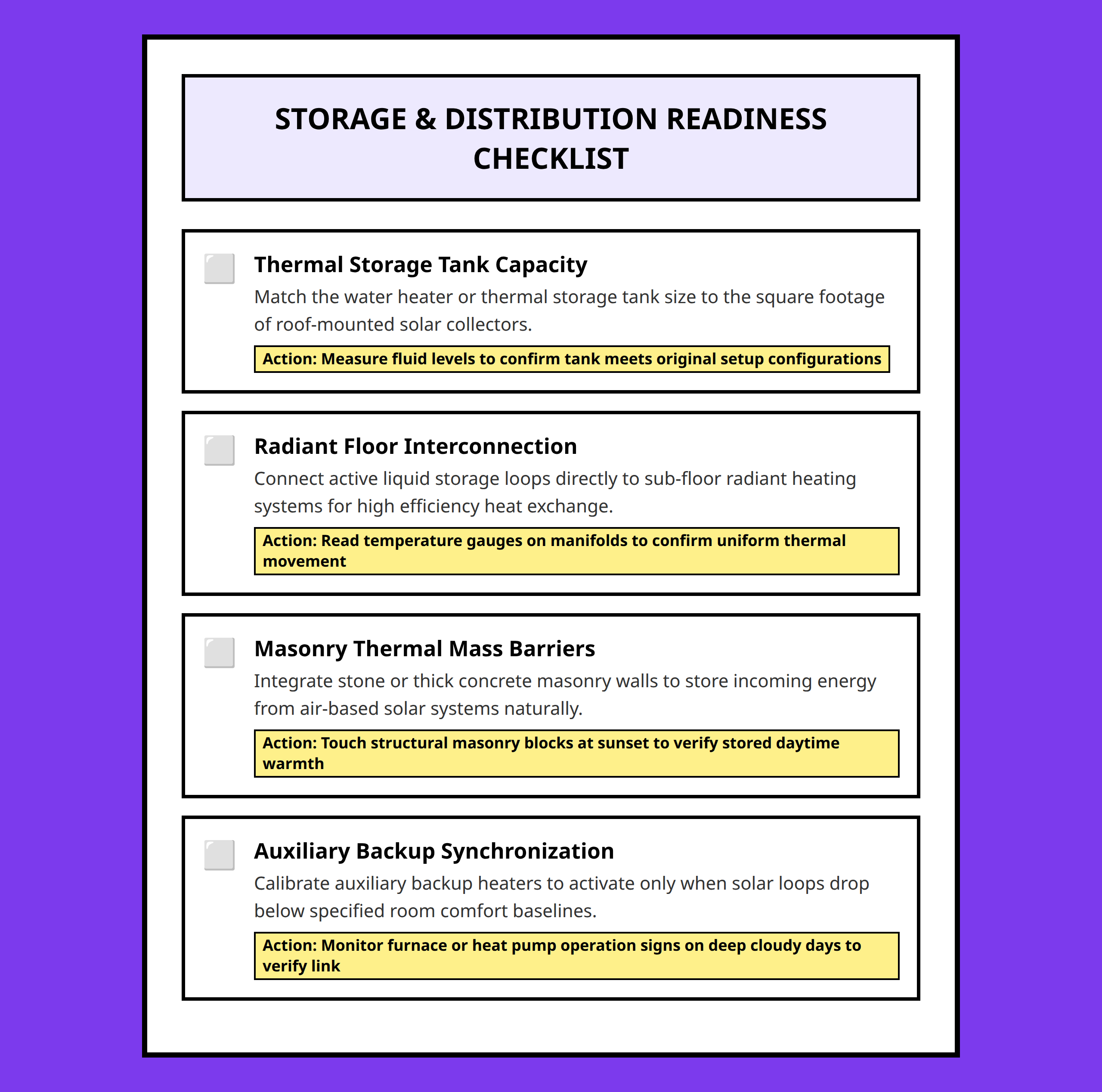
Heat storage is a critical part of any solar heating system. Since sunlight is not available at night or during cloudy weather, stored heat ensures consistent indoor comfort.
One common storage method is thermal storage tanks, which hold heated water or other fluids until they are needed. These tanks allow systems to continue supplying heat even after solar collection has stopped for the day.
Another approach involves using building materials themselves for storage. Masonry systems, for example, absorb and retain heat, slowly releasing it over time to maintain indoor temperature stability.
Once heat is stored, it must be distributed effectively. Radiant floor heating is one of the most efficient methods, as it spreads warmth evenly across rooms from the ground up.
Radiators are another common option, using hot water or air to warm indoor spaces. In many systems, storage tanks and distribution networks work together to maintain steady and comfortable heating throughout the home.
The combination of storage and distribution determines how reliable a solar heating system will feel in daily use.
Choosing Between Liquid and Air-Based Systems
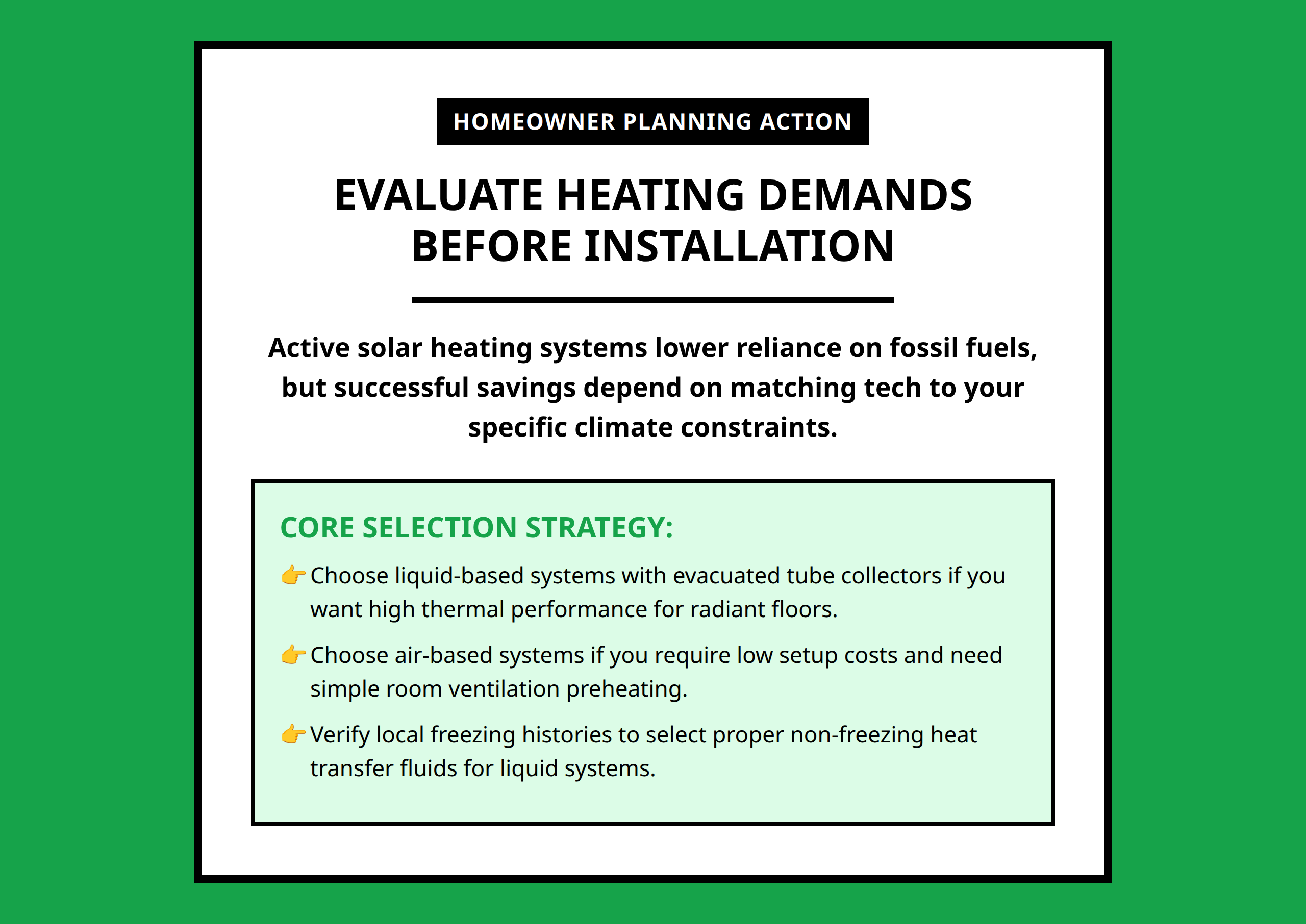
Choosing the right solar heating system depends on how heat will be used and stored in the home. Liquid-based systems are typically better for larger heating needs or where long-term heat storage is important.
Air-based systems are often simpler and may work well for smaller spaces or for supplementing existing heating systems. They can also be useful in buildings where installation of complex plumbing is not practical.
Climate plays an important role as well. Colder regions often benefit from liquid-based systems due to their better heat retention, while milder climates may find air-based systems sufficient for reducing heating demand.
Another factor is system complexity. Liquid systems require pumps, tanks, and plumbing, while air systems rely more on ducting and airflow design. This difference affects both installation cost and maintenance needs.
Ultimately, the best system is not the most advanced one, but the one that matches the building’s heating needs and environmental conditions.
FAQ
FAQ
- Active solar heating: A system that uses mechanical components like pumps or fans to move heat collected from sunlight.
- Solar collectors: Devices that capture sunlight and convert it into heat energy for use in heating systems.
- Evacuated tube collector: A type of solar collector designed to reduce heat loss and improve efficiency in colder climates.
- Radiant heating: A heating method where warm surfaces, such as floors, distribute heat evenly throughout a room.
- Thermal storage: A system that stores heat for later use when sunlight is not available.
Active solar heating is ultimately about controlling when and how heat is delivered to a home. Once the system is understood as a flow—sunlight in, heat captured, heat stored, and heat distributed—the design choices become much clearer.
A practical next step is to evaluate whether your home needs fast, direct heating (air-based) or longer-term stored heat (liquid-based), because that decision shapes the entire system design.
References:
- https://www.energy.gov/energysaver/active-solar-heating
- https://www.youtube.com/watch?v=reHBvwVilFM
- https://www.youtube.com/watch?v=gBMgFAa4IsM
- https://study.com/academy/lesson/video/solar-energy-understanding-active-and-passive-solar-heating.html
- https://www.carboncollective.co/sustainable-investing/active-solar-heating
- https://www.jackcooper.com/active-solar-heating-how-it-works-costs-and-key-benefits/
- https://lehmannelectrical.com/how-does-the-solar-heating-system-work/
- https://solartechonline.com/blog/how-does-solar-heating-work/
- https://www.ahfc.us/iceimages/manuals/building_manual_ch_02_active_solar.pdf
- https://www.pnnl.gov/projects/om-best-practices/solar-water-heating-systems
- https://pixonenergy.com/active-vs-passive-solar-systems-key-differences-explained/
- https://www.eia.gov/energyexplained/solar/solar-thermal-collectors.php
