Proper solar installation requires optimal orientation, minimal shading, and correct tilt angle to maximize sunlight exposure throughout the year.
Most people assume that solar panel performance depends mainly on the panel itself. But in real installations, the biggest differences often come from something much simpler: where and how the panels are placed.
A high-quality solar panel installed in a poor location can underperform significantly, while a standard panel placed correctly can deliver strong and stable output. This is why installation decisions matter as much as equipment choice.
Takeaways
- Panel placement often affects performance more than panel type.
- Sun exposure (irradiance) is the foundation of solar energy output.
- Even partial shading can dramatically reduce system efficiency.
- Tilt angle and orientation must match location conditions for best results.
Why Solar Panel Placement Matters
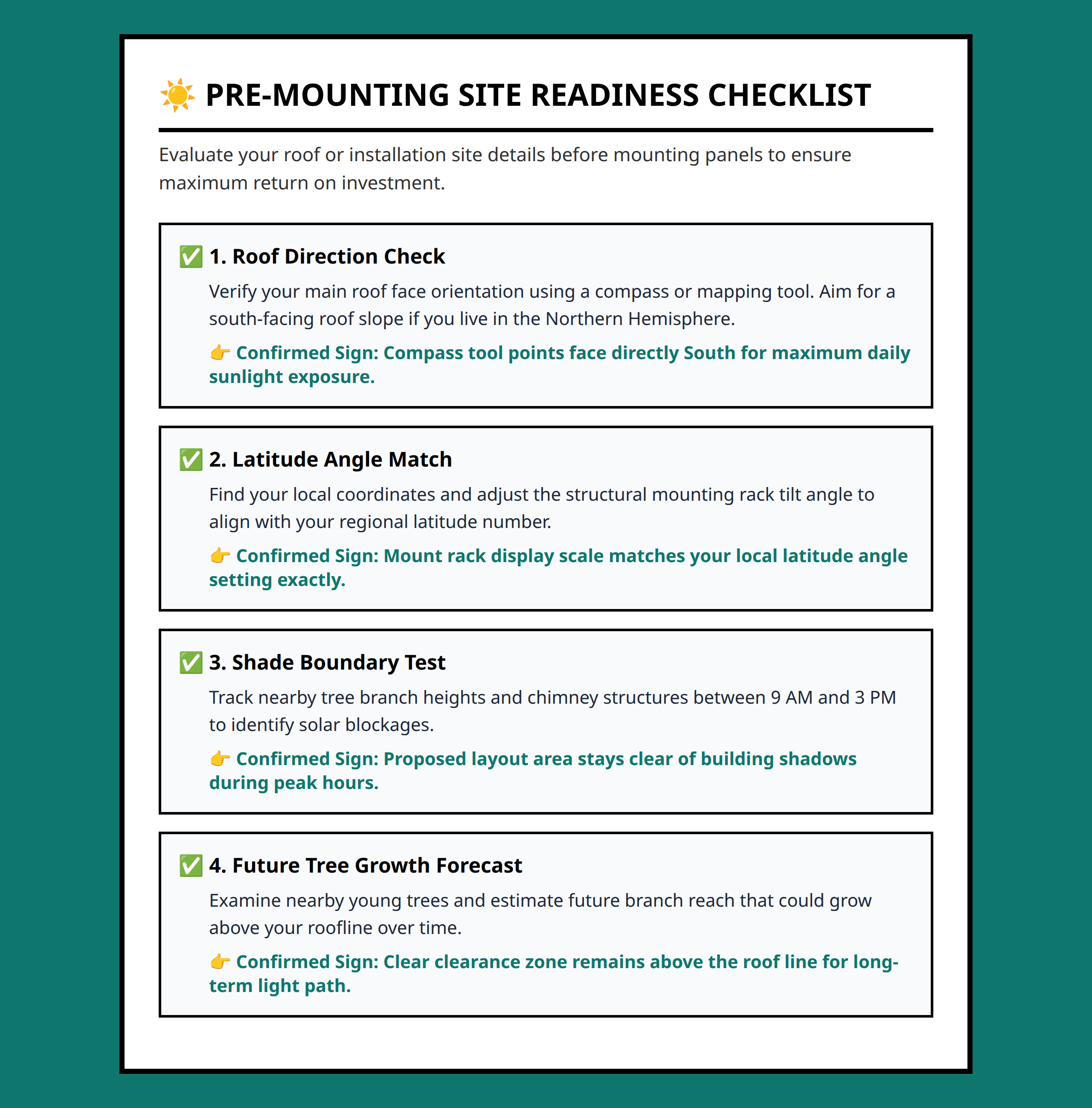
The performance of a solar system begins with irradiance, which is the amount of sunlight reaching a surface. More sunlight exposure means more electricity generation, regardless of panel type.
Location plays a major role in how much solar energy a system can produce over a year. In regions of the northern hemisphere, panels that face south typically receive the most consistent sunlight exposure throughout the day.
This is not just about peak sunlight hours. It is about how evenly sunlight reaches the panels across seasons. A poorly positioned system may perform well at midday but lose significant output in the morning or evening, reducing total daily energy production.
Even small differences in placement can accumulate into noticeable energy loss over time. This is why installers treat orientation as one of the first decisions in system design.
Orientation and Tilt Angle Optimization
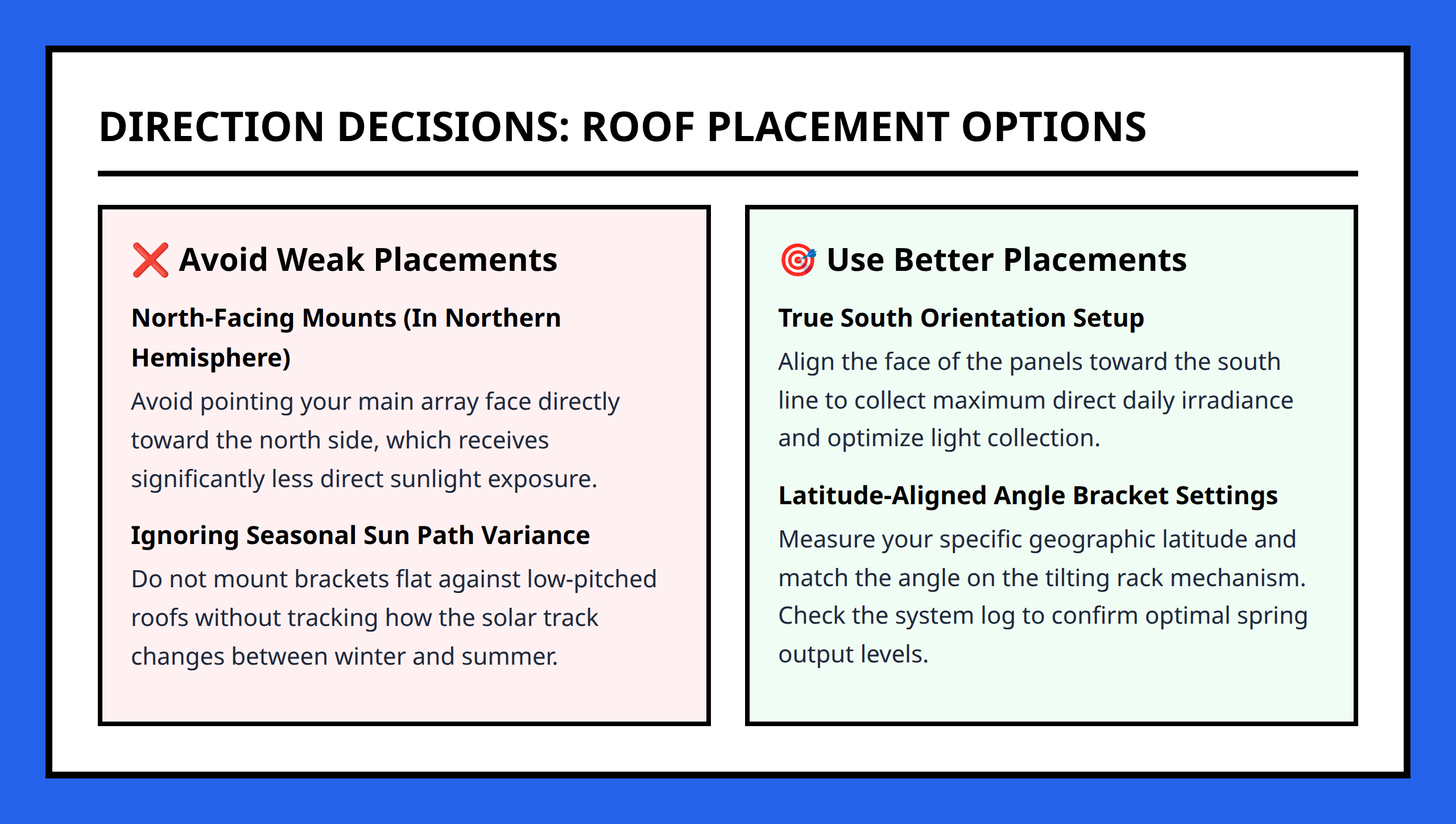
Solar panels generate the most electricity when they are positioned to face the direction of strongest sunlight exposure. In many northern hemisphere locations, this means a south-facing orientation.
A south-facing setup allows panels to follow the sun’s path more evenly throughout the day, reducing energy loss caused by indirect sunlight angles. This improves both consistency and total energy output.
Tilt angle is just as important as direction. Panels that are tilted too flat or too steep will not capture sunlight efficiently. The best angle is often linked to the latitude of the installation site, which helps align the panel surface with the sun’s average position in the sky.
In some installations, seasonal adjustment is used to improve performance further. For example, panels may be tilted slightly differently in summer and winter to match changes in sun height. While not always practical for residential systems, this principle shows how sensitive solar performance is to angle changes.
Incorrect orientation or tilt does not just reduce efficiency slightly—it can lead to long-term energy losses that are difficult to recover without physical adjustments to the system.
The Impact of Shading on Solar Performance
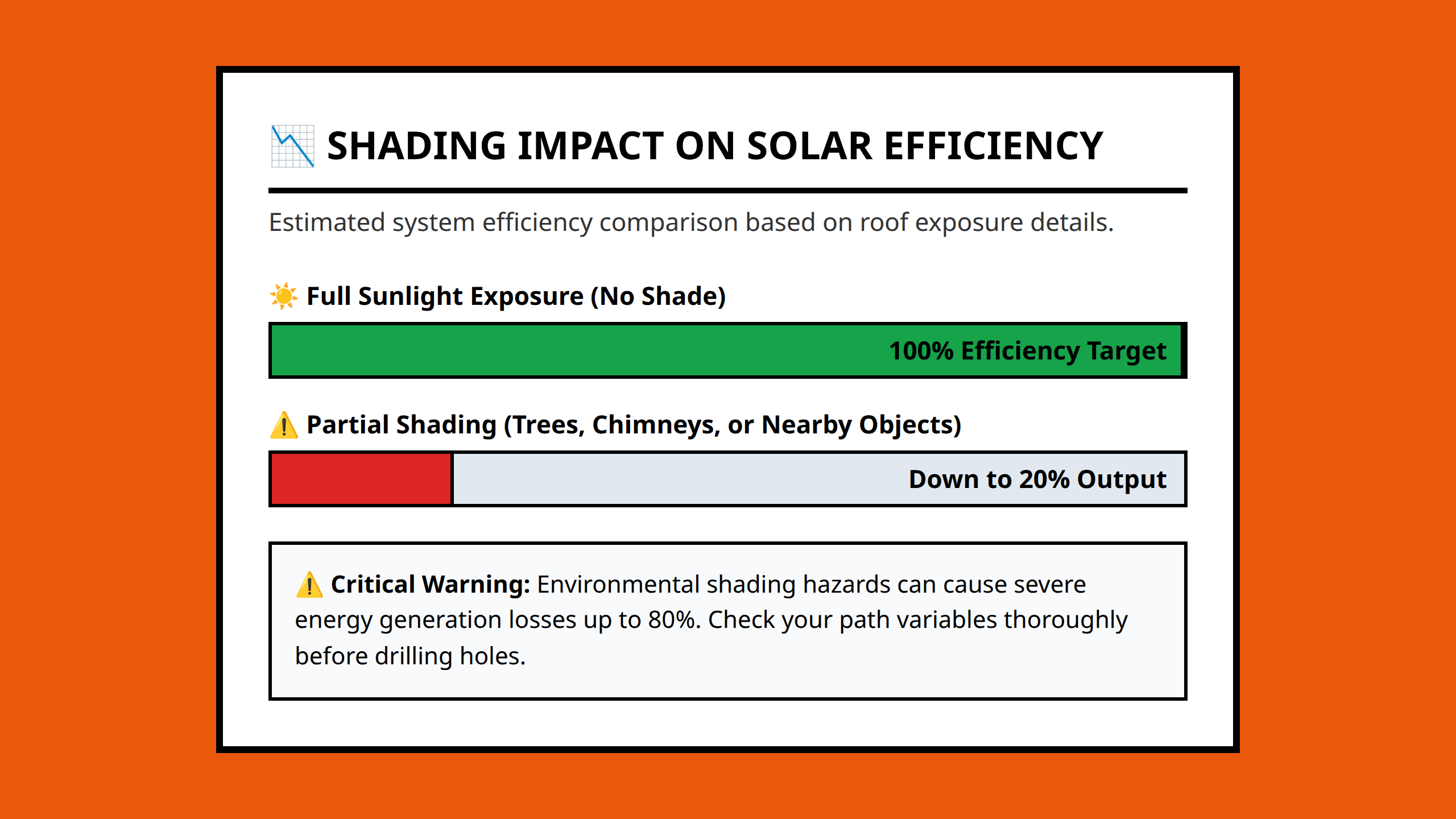
Shading is one of the most underestimated problems in solar panel installation. Even a small shadow on part of a panel can significantly reduce overall system output.
This happens because solar panels are connected in circuits. When one part of a panel is shaded, it can affect the flow of electricity across the entire system, not just the shaded section.
Studies and field observations show that shading can reduce efficiency by up to 80% in severe cases. This means that a system operating under partial shade may produce only a fraction of its potential energy, even if the rest of the panel is exposed to sunlight.
Common sources of shading include trees, nearby buildings, chimneys, and even future growth of vegetation. A tree that seems harmless during installation may grow over time and gradually block sunlight.
Because of this, shading is not just a momentary issue—it is a long-term planning factor. A system that is clear today may not stay clear in five or ten years without proper site evaluation.
Tools and Techniques for Site Selection
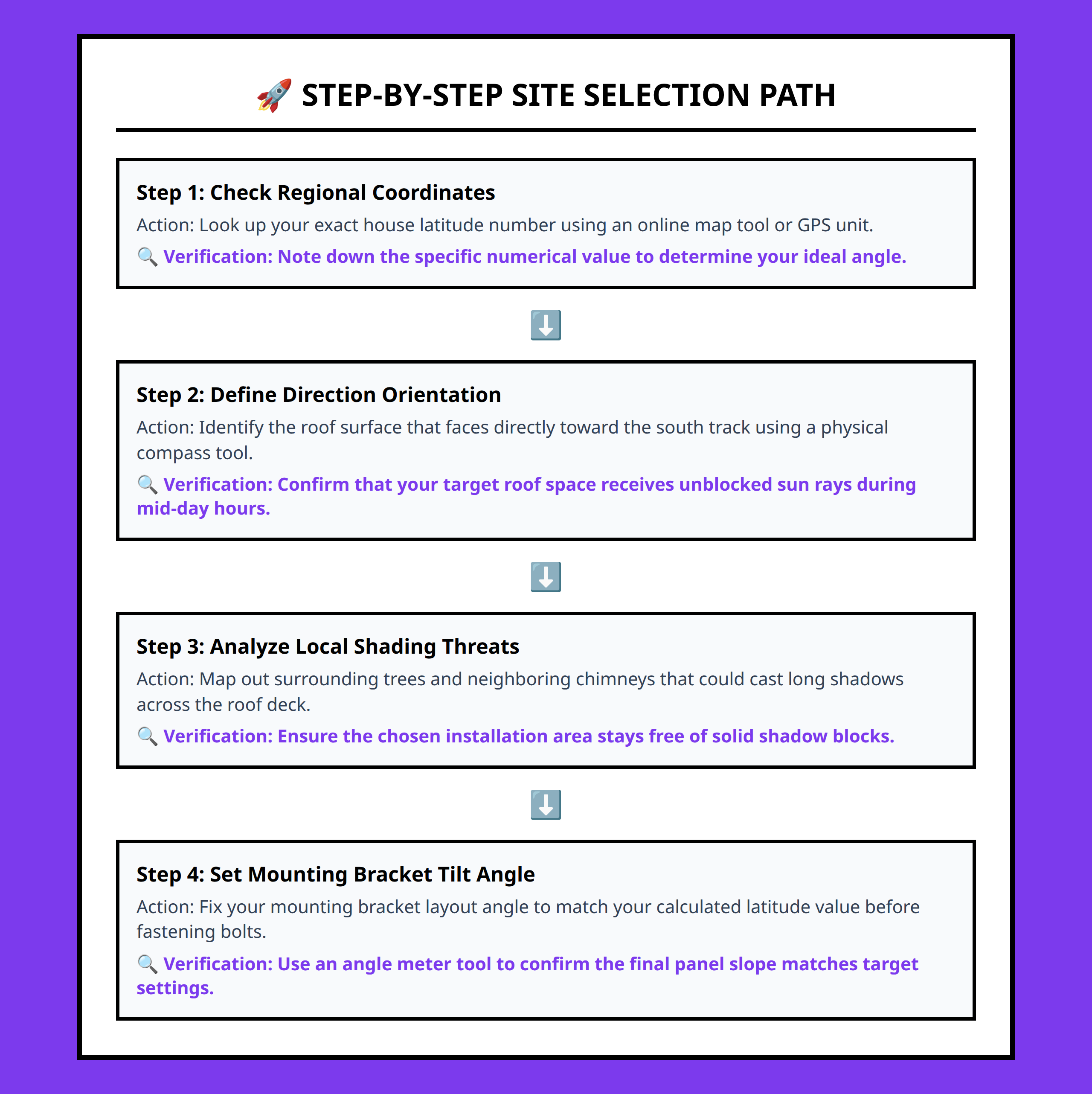
Choosing the right installation site requires more than visual inspection. Modern solar planning often uses tools that track sun movement and evaluate shading across different times of the year.
Solar path analysis tools help simulate how sunlight moves across a roof or installation area. This allows homeowners to identify areas that receive consistent sunlight versus those affected by frequent shading.
Seasonal sunlight variation is another important consideration. A location that receives strong sunlight in summer may be partially shaded in winter due to the lower sun angle. Evaluating both conditions ensures more stable year-round performance.
Long-term environmental changes also matter. Trees grow, nearby structures may be built, and roof conditions can change. A good installation plan takes these future possibilities into account instead of focusing only on current conditions.
Simple tools like shading maps or mobile solar calculators can help homeowners estimate potential energy loss before installation begins. These tools reduce guesswork and improve decision-making.
FAQ

FAQ
- Irradiance: The amount of solar energy received on a surface, which directly affects how much electricity solar panels can produce.
- Orientation: The direction a solar panel faces, which determines how much sunlight it receives throughout the day.
- Tilt angle: The angle at which a solar panel is installed relative to the ground, affecting sunlight absorption efficiency.
- Shading: Any obstruction that blocks sunlight from reaching solar panels, reducing their energy output.
- Solar path: The movement of the sun across the sky throughout the day and year, used to optimize panel placement.
The most efficient solar systems are not just built with good equipment—they are built with careful placement. Once orientation, tilt, and shading are properly handled, even a simple system can perform reliably for years.
A practical next step is to observe your roof or installation area at different times of day and note where shadows fall. That simple check often reveals more about solar potential than any specification sheet.
References:
- https://www.energysage.com/solar/solar-panel-performance-orientation-angle/
- https://maineenergyexperts.com/how-to-position-solar-panels-for-maximum-efficiency/
- https://www.solaredge.com/aus/for-home/info-centre/panels/solar-panel-placement
- https://energyscaperenewables.com/post/solar-panel-orientation-guide/
- https://www.portable-sun.com/blogs/news/how-to-position-solar-panels
- https://ethicalenergysolar.com/blog/solar-panel-placement/
- https://www.reddit.com/r/solar/comments/1h6pm64/the_best_angle_for_fixed_panels_is/
- https://www.solargraf.com/blog/optimizing-solar-pv-systems-strategies-to-minimize-shading-impact
