Sizing a solar system requires calculating daily energy consumption in watt-hours and matching it with solar panel output under real sunlight conditions.
One of the most common mistakes people make when planning solar power for their home is guessing. They estimate based on rough ideas like “a few panels should be enough” or “it should cover most of my bill.” But solar energy doesn’t work well with guesses. It works with measurements.
When a solar system is too small, it fails to meet your daily energy needs. When it is too large, you may end up paying for capacity you never use. The key is understanding how much electricity your home actually consumes and how much energy solar panels can realistically produce.
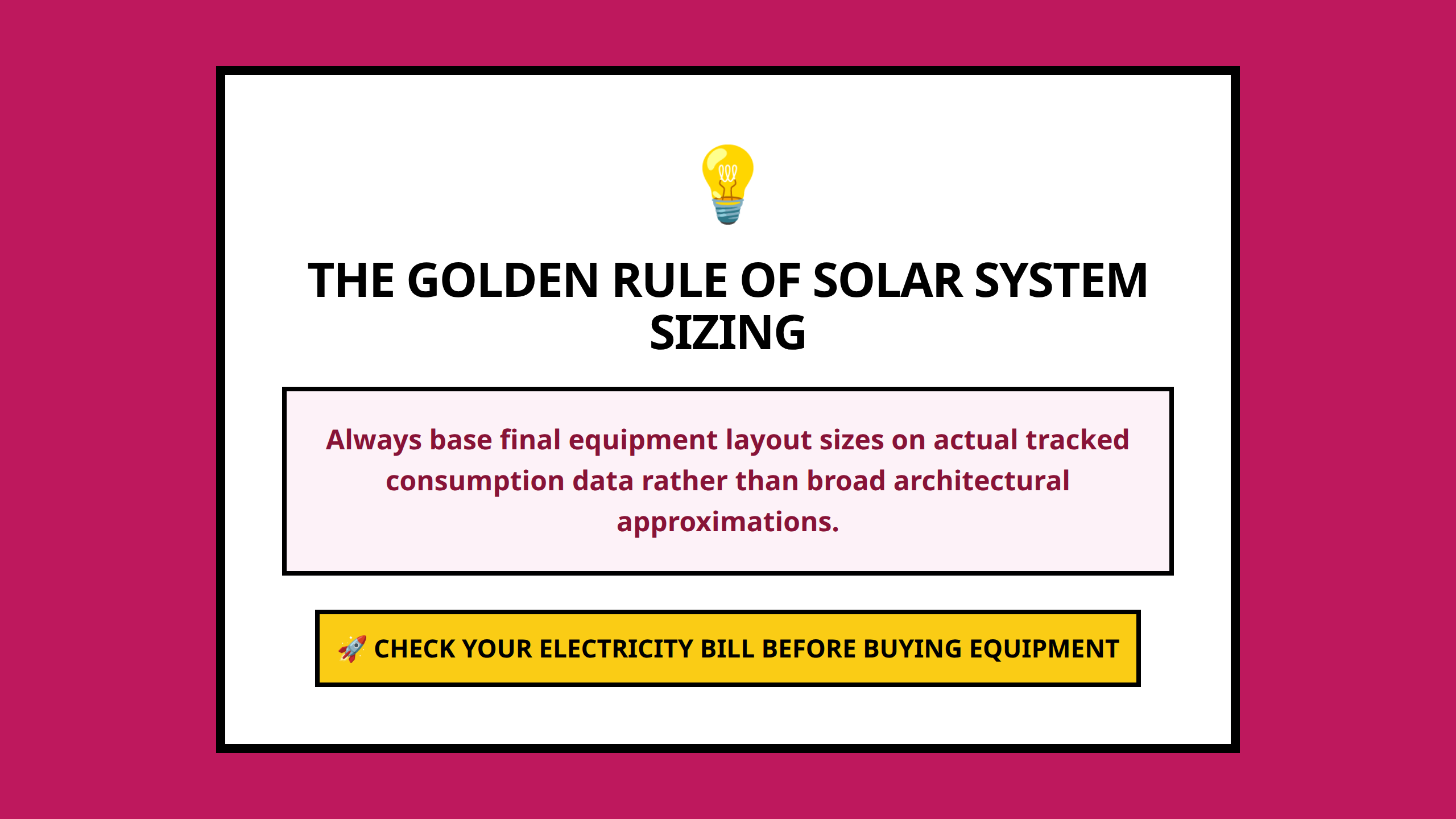
Takeaways
- Solar system sizing starts with measuring daily energy use in watt-hours or kilowatt-hours.
- Panel output depends on sunlight conditions, not just labeled wattage.
- Real-world performance is always lower than ideal lab ratings due to environmental losses.
- A correctly sized system balances consumption, production, and efficiency losses.
Understanding Household Energy Consumption
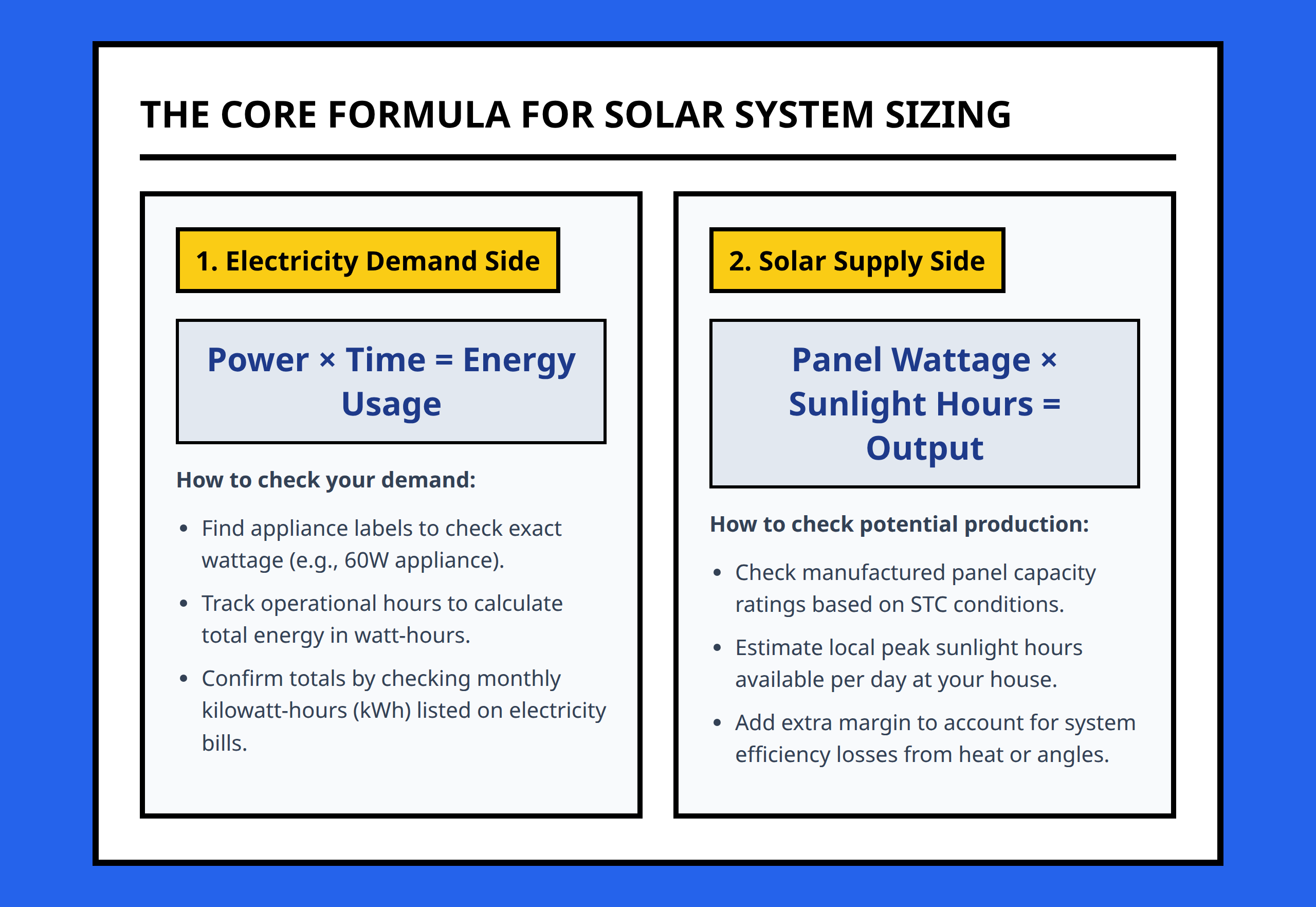
The first step in sizing a solar power system is understanding how much electricity your home actually uses. Electricity consumption is measured in watt-hours (Wh) or kilowatt-hours (kWh), which reflect how much energy is used over time.
A watt-hour is simple: it means how much power (watts) a device uses over one hour. For example, if a 60-watt light bulb runs for one hour, it consumes 60 watt-hours of energy. If it runs for five hours, it uses 300 watt-hours.
Most households do not track energy in daily terms, but monthly electricity bills provide the total consumption in kilowatt-hours. One kilowatt-hour equals 1,000 watt-hours. This number is the foundation for solar system design because it reflects real usage patterns over time.
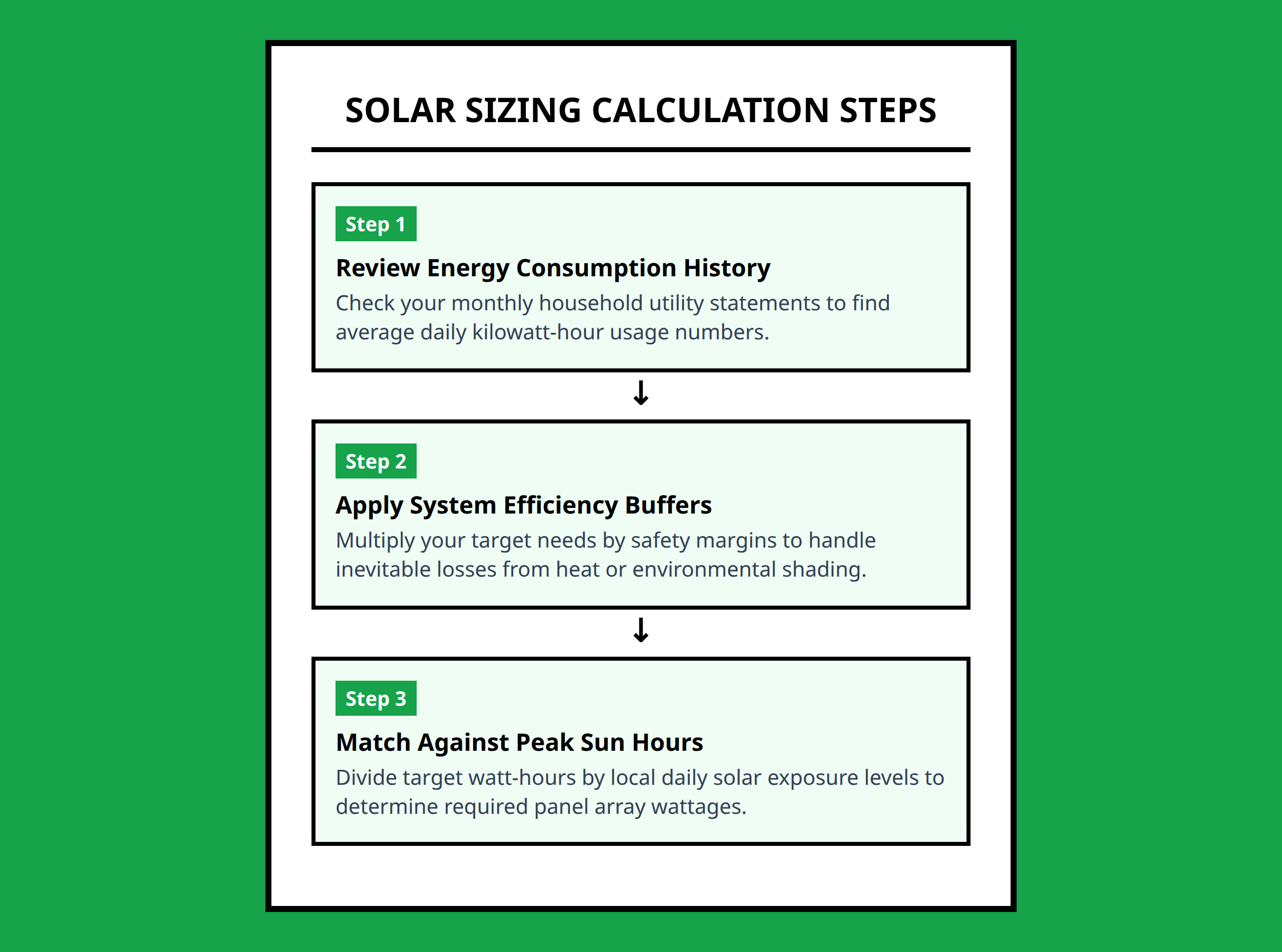
To size a system correctly, you need to break down your usage into daily energy needs. That means dividing your monthly usage by the number of days in the month to get an average daily consumption figure.
Without this step, any solar system design becomes guesswork. And guesswork leads to systems that either fall short or exceed your actual needs.
The Core Formula for Solar System Sizing
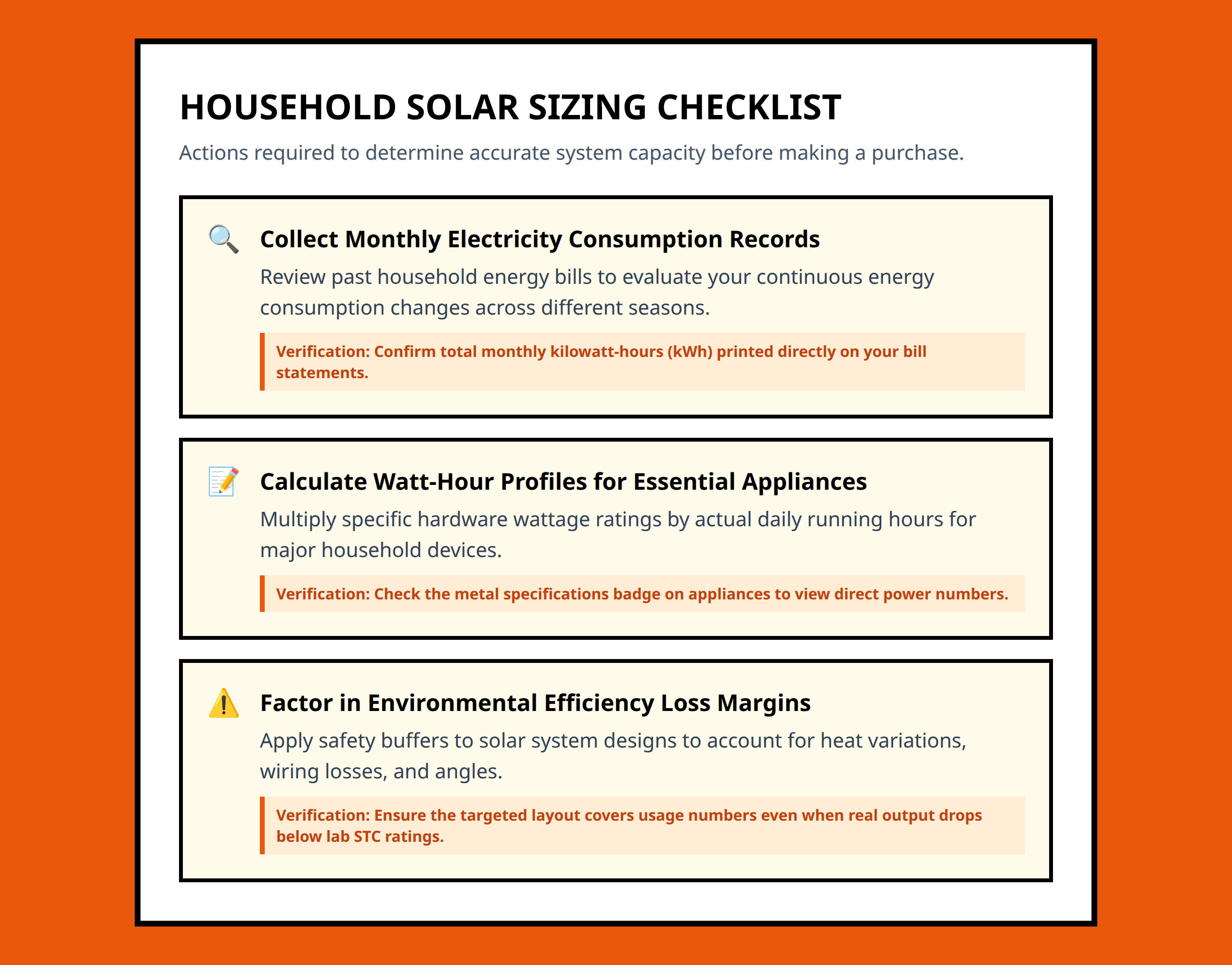
Once you understand energy consumption, the next step is connecting it to solar panel output. Solar system sizing relies on a simple relationship: energy consumed must be matched by energy produced.
The basic energy formula is:
Power × Time = Energy
This formula helps calculate both sides of the system. On the consumption side, it tells you how much energy your appliances use. On the production side, it helps estimate how much energy solar panels can generate over time.
For solar panels, output is usually based on wattage ratings. A 100-watt panel produces more energy than a 50-watt panel under the same sunlight conditions. However, that output depends on how many hours of usable sunlight the panel receives each day.
The production formula is:
Panel Wattage × Sunlight Hours = Energy Production
For example, if a 100-watt panel receives 5 hours of strong sunlight, it can produce about 500 watt-hours of energy in that day under ideal conditions.
These formulas are the foundation of solar design. They allow you to compare your daily energy needs with realistic solar output and determine how many panels are required.
Factors That Affect Solar Output
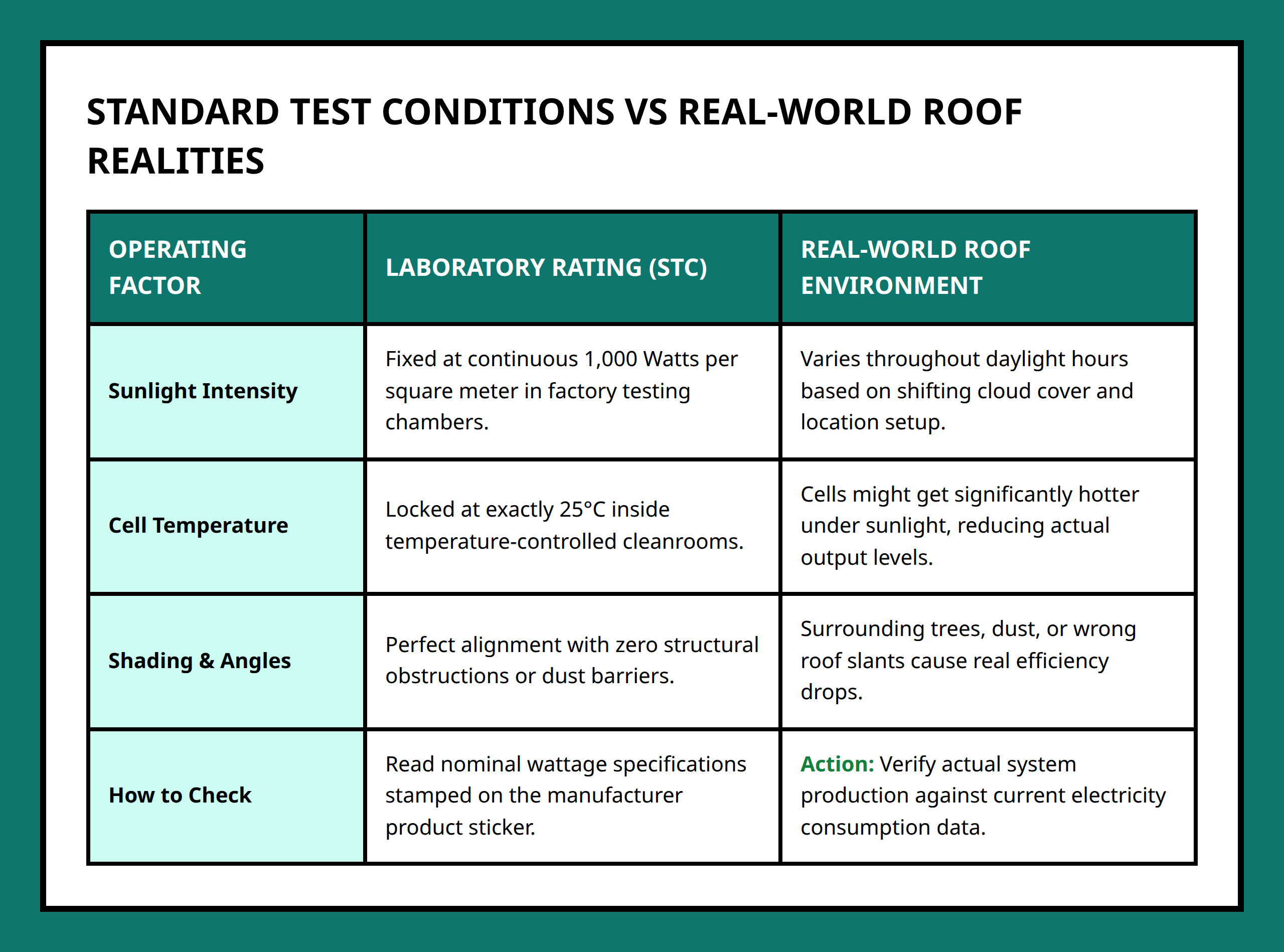
Solar panel output is not constant. Even if a panel is rated at a specific wattage, real-world conditions often reduce its performance. This is why system sizing must always account for environmental factors.
One of the most important factors is sunlight intensity. Different locations receive different levels of solar energy depending on geography, weather, and seasonal changes. A system in a sunny region will generate more electricity than the same system in a cloudy or shaded area.
Seasonal variation also plays a role. During winter months, shorter daylight hours and lower sun angles reduce energy production. In summer, longer daylight hours usually increase output.
System efficiency losses are another key factor. Not all the energy produced by solar panels reaches your home appliances. Energy is lost through wiring, conversion processes, and system components like inverters.
In addition, lab-rated panel output is based on ideal conditions that rarely exist in real life. This means actual energy production is often lower than what the specifications suggest. Planning for this difference is essential when sizing a system.
Even small factors like dust, temperature, and installation angle can affect performance. That is why real-world sizing always includes a buffer rather than relying on perfect calculations.
Matching Panel Capacity to Energy Needs
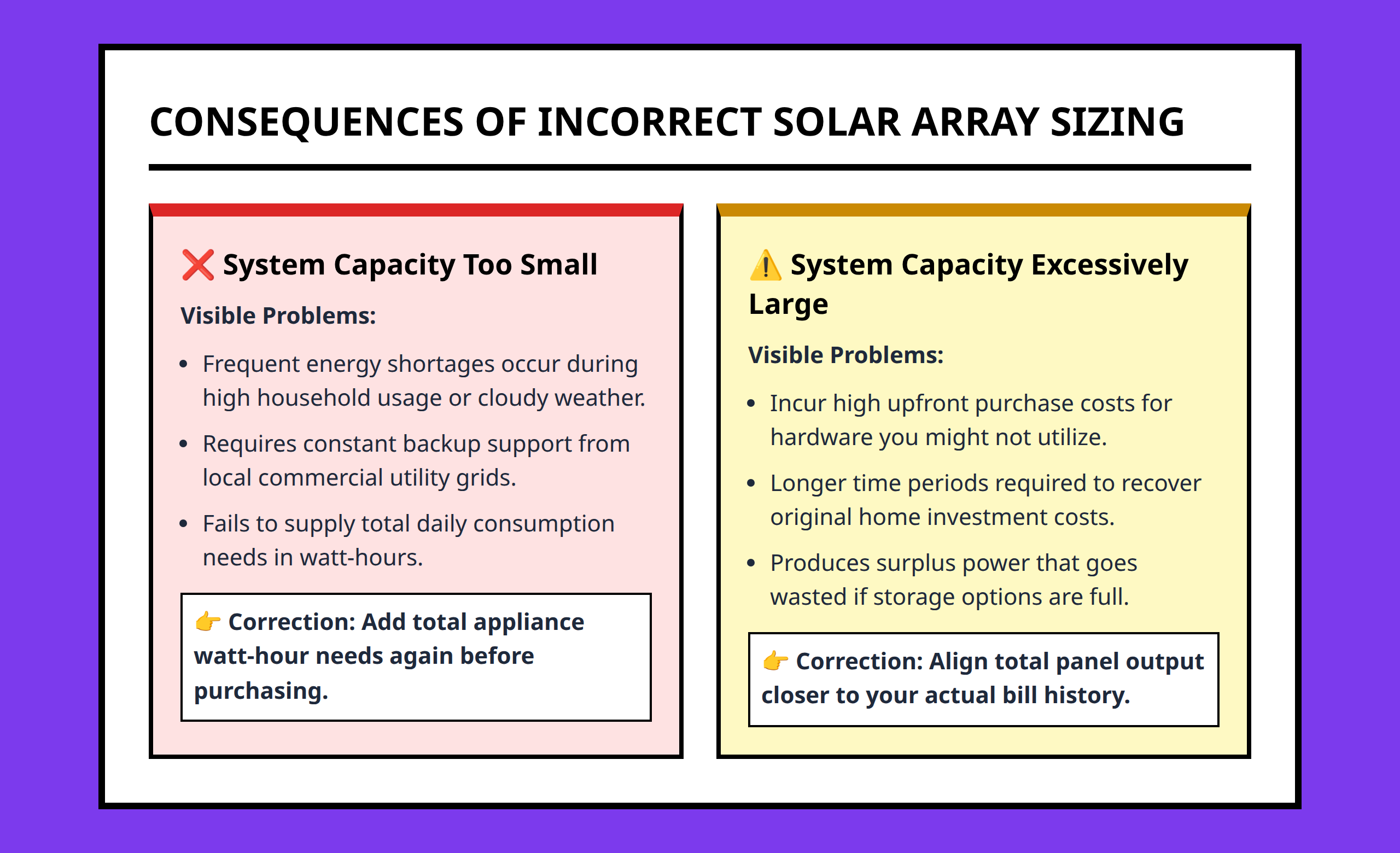
After calculating both energy consumption and expected production, the next step is matching them together to design the system size. This is where theory becomes practical planning.
The goal is to ensure that total daily energy production from all panels meets or slightly exceeds your household’s daily energy consumption. If production is too low, you will still rely on external electricity. If it is too high, you may have unused capacity unless you are storing or feeding energy back into the grid.
A practical approach is to calculate your total daily consumption first, then divide it by the expected daily output of one solar panel. This gives you a rough estimate of how many panels you need.
For example, if a home uses 3,000 watt-hours per day and each panel produces about 500 watt-hours per day under local conditions, you would need around six panels to meet basic energy needs.
However, system designers usually add a margin to account for inefficiencies. This buffer ensures that unexpected losses—like cloudy days or reduced panel performance—do not lead to energy shortages.
Standard Test Conditions (STC) are often used to rate solar panels. These conditions represent controlled laboratory settings that allow fair comparison between panels. But real-world performance is usually lower, so sizing should never rely only on STC ratings.
Instead, practical system design always adjusts for real sunlight conditions and energy losses to create a more reliable and stable setup.
FAQ
- Watt-hour (Wh): A unit of energy that measures how much power is used over time.
- Kilowatt-hour (kWh): Equal to 1,000 watt-hours, commonly used in electricity bills.
- Solar panel wattage: The rated power output of a solar panel under ideal conditions.
- STC (Standard Test Conditions): A standardized lab setting used to rate solar panel performance for comparison.
- Inverter: A device that converts solar-generated DC electricity into usable AC electricity for home appliances.
Correct solar system sizing is not about choosing the biggest system or the cheapest one. It is about matching real household energy use with realistic solar production. Once that balance is clear, the entire system becomes more predictable and efficient.
A practical next step is to review your electricity bill and write down your average daily energy usage. That number is the foundation for every decision that follows in solar planning.
References:
- https://www.youtube.com/watch?v=XjMYa4BWzw8
- https://www.youtube.com/watch?v=BKRraTpBnGo
- https://www.youtube.com/shorts/ZFvGvd-BBFQ
- https://www.gogreensolar.com/pages/sizing-solar-systems
- https://www.energysage.com/solar/how-many-solar-panels-do-i-need/
- https://enphase.com/blog/homeowners/homeowners-guide-choosing-right-number-solar-panels
- https://www.energy.gov.au/solar/solar-system-design/size-your-solar-system
- https://ohioline.osu.edu/factsheet/CDFS-4102
- https://www.nexamp.com/blog/how-many-solar-panels-do-i-need
- https://www.leonics.com/support/article2_12j/articles2_12j_en.php
- https://a1solarstore.com/blog/how-to-size-a-solar-system-for-your-home.html
- https://www.linkedin.com/pulse/how-size-solar-system-choose-right-kit-renogy-9syaf
