Square footage cost is about far more than a mortgage payment. Extra space often brings additional possessions, maintenance responsibilities, time commitments, and emotional burdens that many buyers fail to consider before choosing a larger home.
Bigger homes are often presented as a sign of progress. More rooms, larger storage areas, and additional living space can feel like obvious upgrades. Yet many homeowners eventually discover that extra space comes with obligations that were never included in the sales brochure.
What interests me most is how the true cost of a home often appears after the move. The purchase price is visible from the beginning. The ongoing demands created by extra space reveal themselves slowly through daily life.
Takeaways
- Empty space tends to attract possessions, and possessions create ongoing responsibilities.
- The true cost of square footage includes maintenance, organization, cleaning, and management time.
- More space often encourages additional spending beyond the original home purchase.
- Every room should justify its existence through regular use, not occasional possibilities.
- The right home size supports your lifestyle without creating unnecessary burdens.
Why Empty Space Rarely Stays Empty
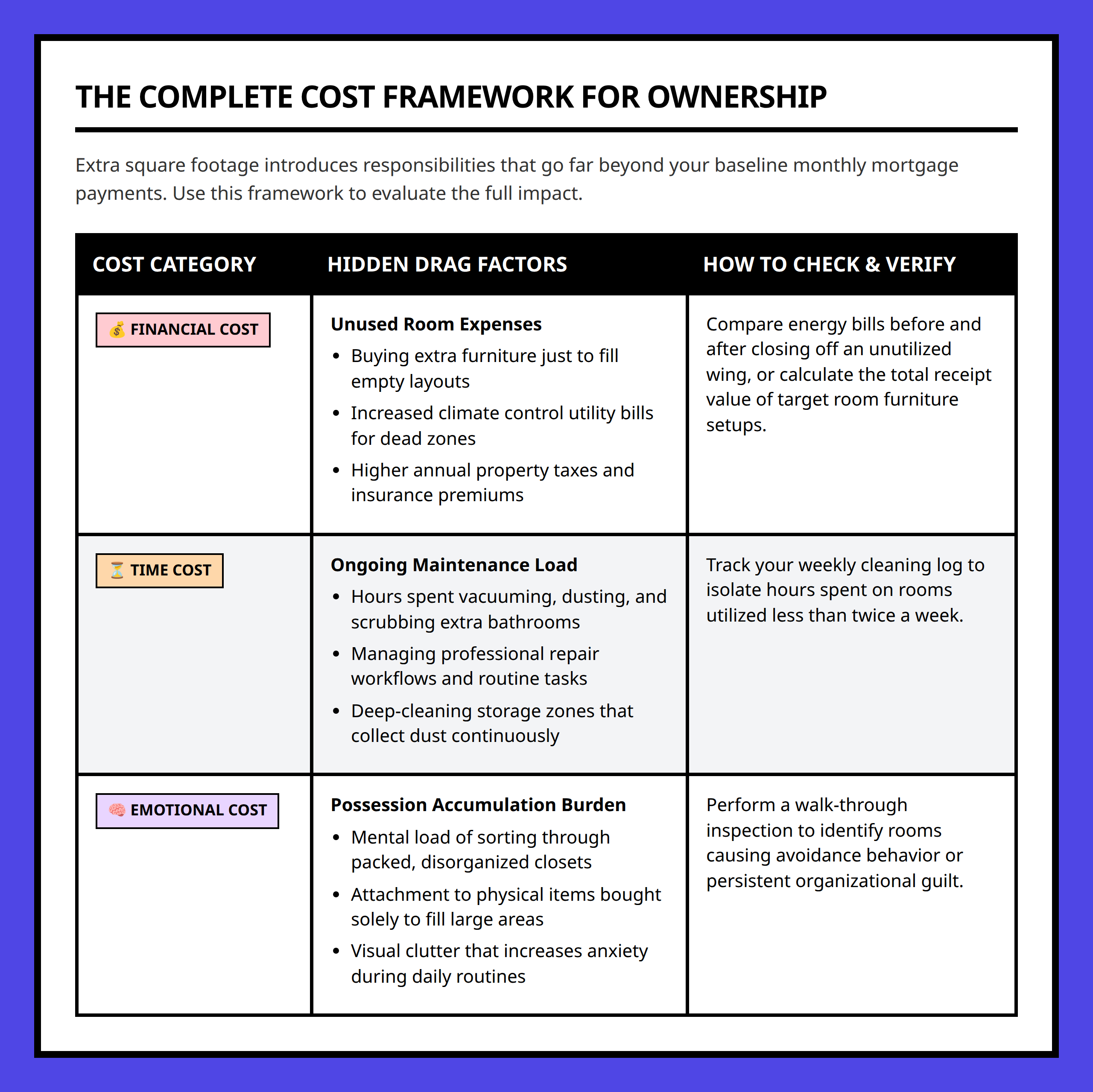
One of the most important realities of homeownership is that unused space rarely remains unused.
When people acquire additional rooms, larger garages, bigger closets, or extra storage areas, those spaces often become filled over time. The process usually happens gradually. A few boxes are stored temporarily. Furniture is purchased for a spare room. Seasonal items begin accumulating. Before long, the space requires management.
The key issue is not the possessions themselves. The issue is that every possession introduces new responsibilities. Items need to be organized, cleaned, repaired, stored, moved, protected, and eventually replaced or removed.
An unused room may appear inexpensive when viewed during a home tour. In practice, that room often becomes a container for future obligations.
A useful question is not “How much space do I want?” but “How much space am I willing to maintain?”
The Complete Cost Framework for Ownership
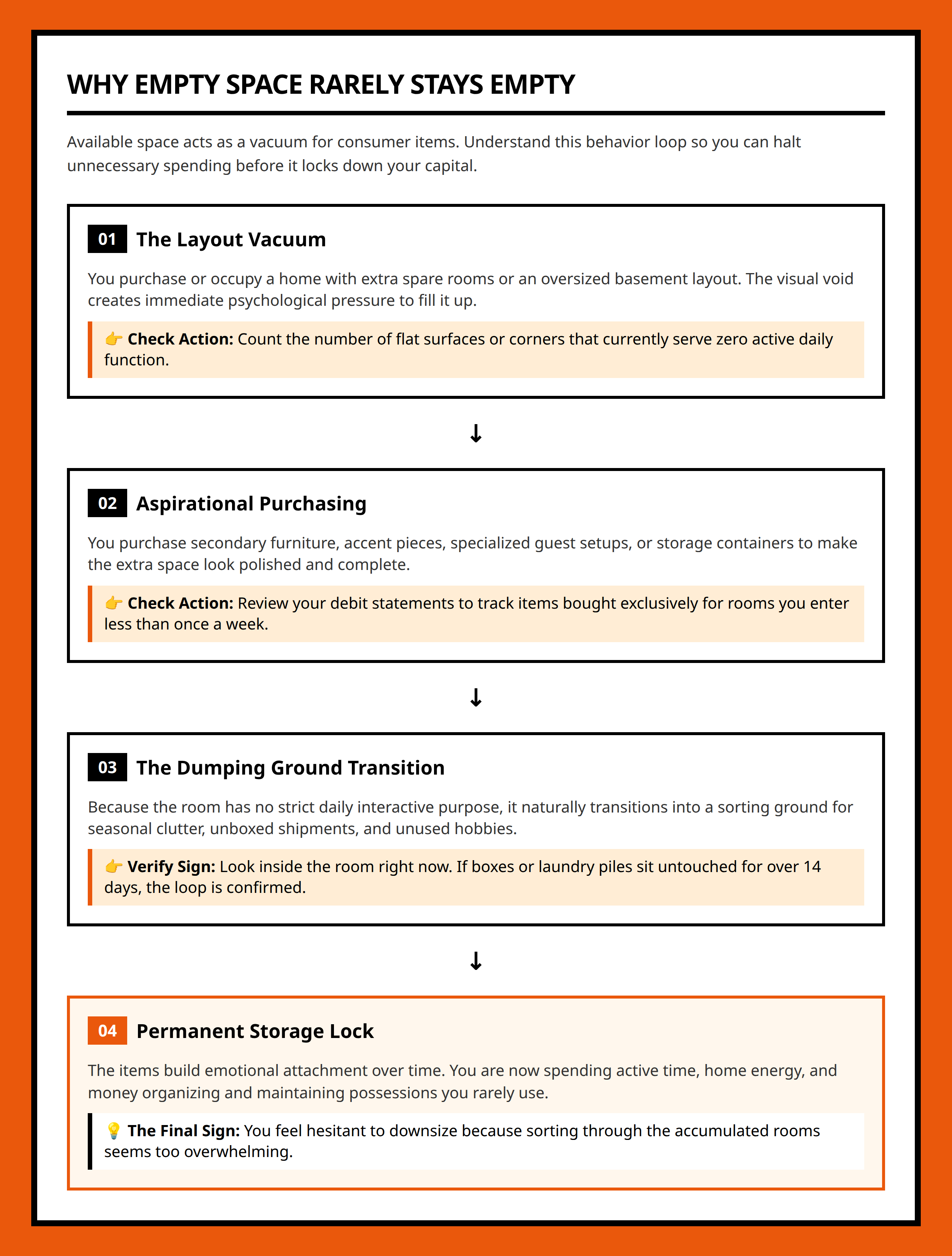
The true square footage cost can be understood through three categories: financial costs, time costs, and emotional costs.
Financial Costs
The financial cost of extra space extends beyond the initial purchase.
Larger homes typically require additional furniture, more upkeep, more utilities, and more resources. Even when each expense appears small individually, they accumulate over years of ownership.
Additional space can also encourage purchasing items that would not have been necessary otherwise. Empty rooms often invite spending because people naturally want those rooms to feel useful.
Time Costs
For many homeowners, time becomes the largest hidden expense.
Every additional square foot must eventually be cleaned, organized, maintained, and monitored. Larger homes create more surfaces, more systems, and more possessions competing for attention.
A practical way to think about home size is to view it as a commitment of future hours. The larger the property, the larger the ongoing demand on your time.
Emotional Costs
Possessions often create emotional responsibilities as well.
The more items people own, the more decisions they must make about storing, managing, repairing, and eventually letting go of those items. Extra space can quietly increase mental clutter alongside physical clutter.
| Cost Type | What Creates It | Long-Term Effect |
|---|---|---|
| Financial Cost | Furniture, maintenance, utilities, storage | Higher ongoing expenses |
| Time Cost | Cleaning, organizing, upkeep | Reduced free time |
| Emotional Cost | Managing possessions and clutter | Additional mental burden |
Choosing the Right Amount of Space

The goal is not to buy the smallest possible home. The goal is to buy space that serves a clear purpose.
Many buyers evaluate homes based on future possibilities. A room might become a hobby room someday. A large storage area might be useful eventually. An extra living area might be used occasionally.
Those possibilities matter, but they should be balanced against actual daily needs.
An effective approach is to examine how frequently a space will be used. A room used every day creates value. A room used only a few times each year may create more responsibility than benefit.
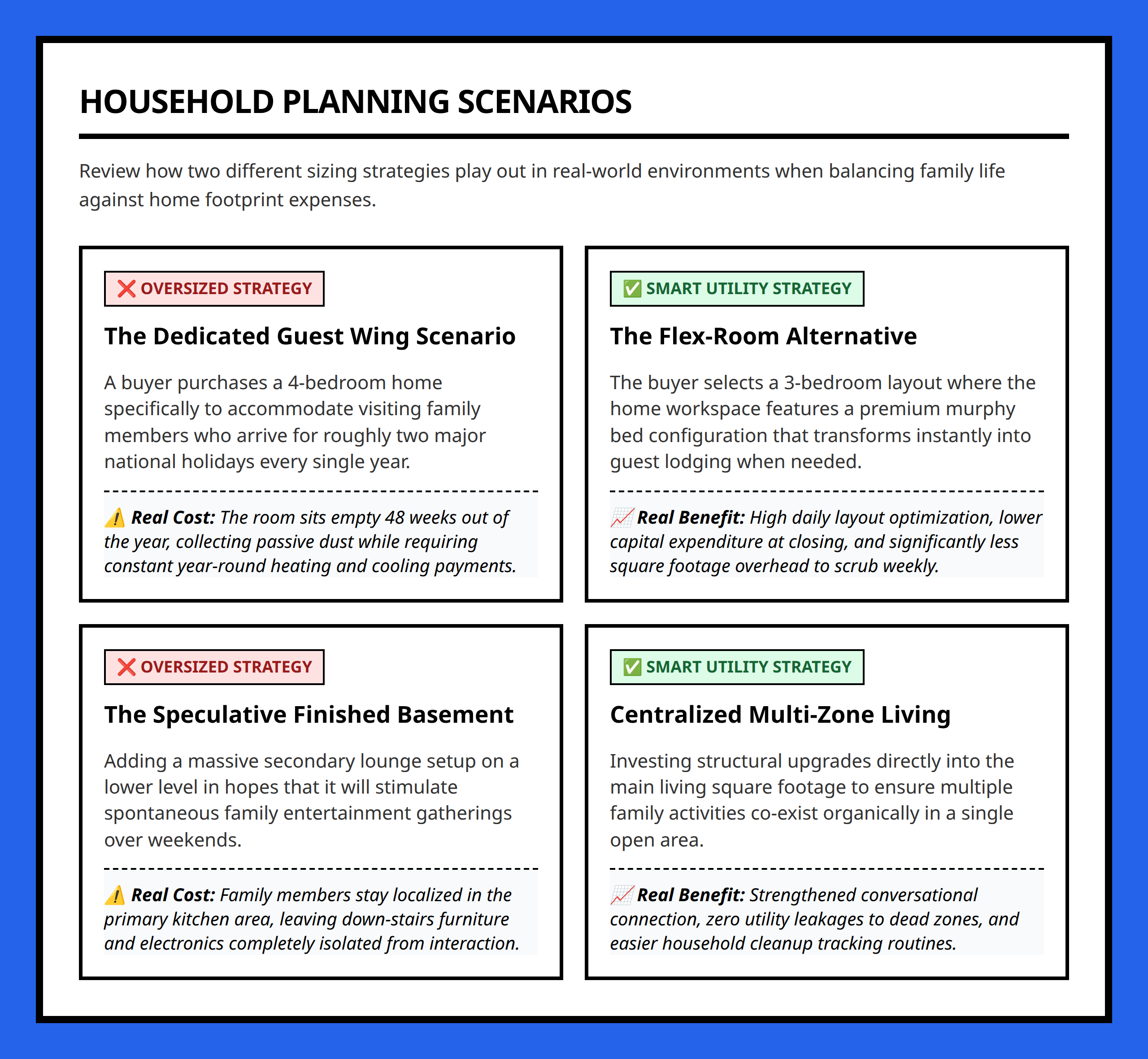
Imagine two households with similar budgets. One chooses a larger home with several rarely used rooms. The other selects a slightly smaller home where nearly every space serves a regular purpose. The second household may enjoy lower maintenance demands, less clutter, and greater flexibility even though the home itself is smaller.
When evaluating a property, it helps to distinguish between lifestyle needs and lifestyle fantasies. Needs support daily living. Fantasies often create long-term costs without providing equivalent value.
FAQ
The Question Worth Asking Before You Buy
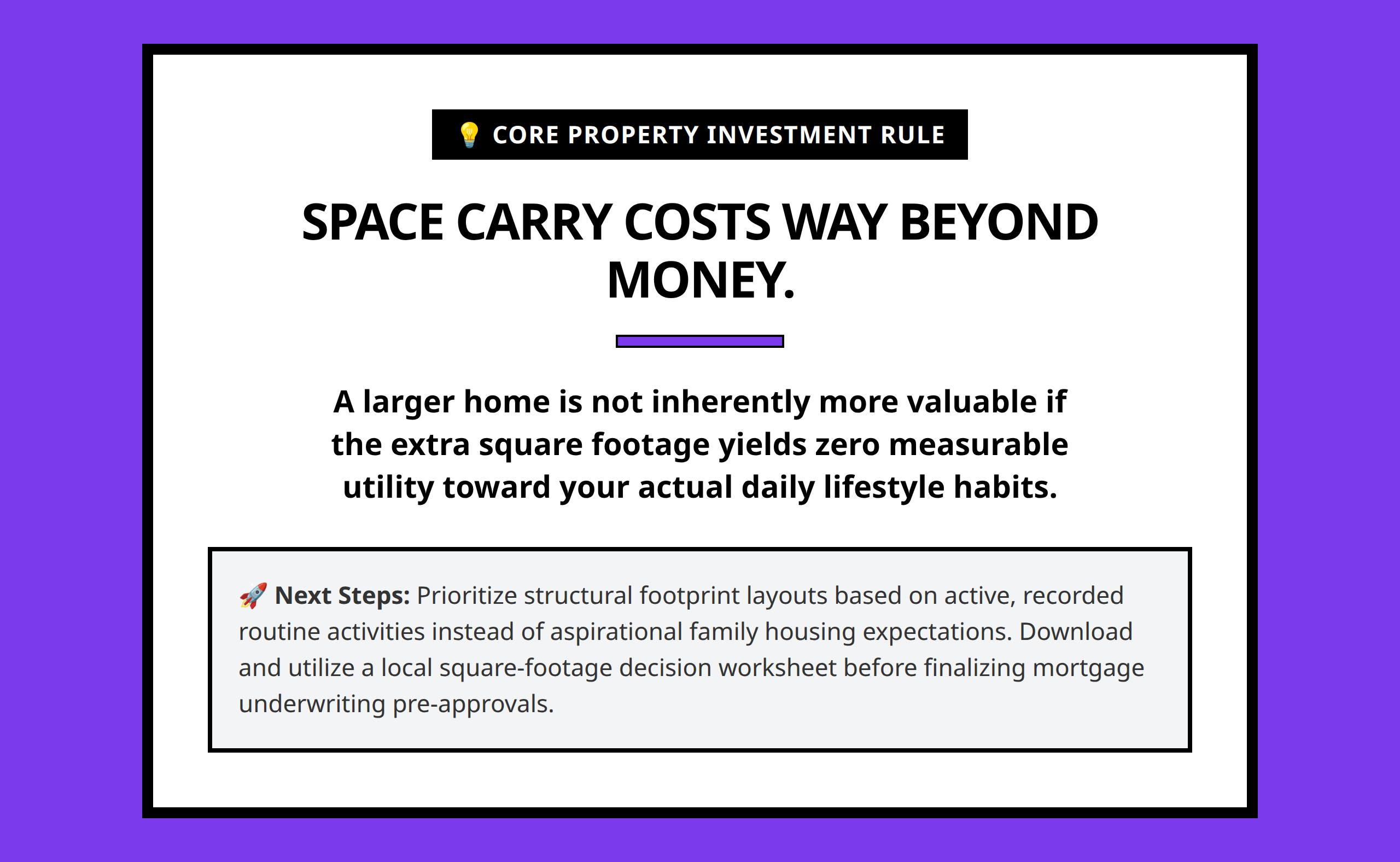
Space is never truly free. Every room, closet, storage area, and additional square foot eventually demands money, attention, maintenance, or time.
The smartest home-size decision is rarely about maximizing square footage. It is about finding the point where space supports your life without quietly taking control of it.
Before making a purchase, walk through each room and ask a simple question: “How will I use this space every week?” The answer often reveals whether you are buying a useful asset or a future responsibility.
- Square Footage: The total usable floor area inside a home or building.
- Ownership Cost: The full collection of expenses and responsibilities associated with owning a home beyond the purchase price.
- Maintenance: The ongoing work required to keep a home, room, or possession in good condition.
- Lifestyle Cost: The effect a purchase has on time, habits, attention, and daily living.
- Possession Management: The effort required to organize, store, maintain, and eventually dispose of owned items.
